

The rapid growth of artificial intelligence (AI) in America is facing several challenges. One significant concern is a rising wave of skepticism towards technology. A recent survey revealed that 58% of Americans have doubts about AI’s impact on jobs.
Another issue is the heavy financial burden on AI companies, which are accumulating massive debts by planning to issue about $450 billion in bonds this year. Compounding these worries is the possibility that more efficient and affordable AI technologies may replace the expensive large language models currently favored in Silicon Valley.
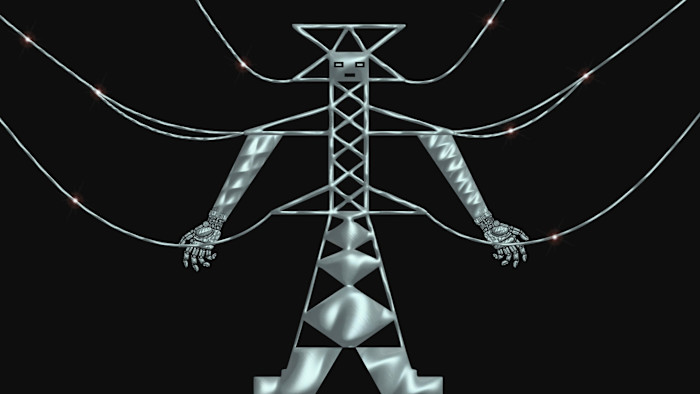
However, a more fundamental problem looms: the need for electricity. As the demand for AI technologies grows, experts predict that global electricity consumption for data centers might double by 2030, with the U.S. and China experiencing even steeper increases.
China has proactively tackled this electricity challenge, having added an impressive 1,500 gigawatts of energy capacity since 2021, now totaling nearly 3,900 gigawatts. In stark contrast, the United States has not significantly expanded its energy capacity, which remains around 1,373 gigawatts—less than what China has added in just four years.
Alarmingly, projections indicate that China will expand its electricity generation capabilities by over 3.4 terawatts in the next five years—six times more than the U.S. This has raised concerns within the American tech industry. Nvidia’s CEO, Jensen Huang, has indicated that China could potentially outpace the U.S. in the AI sector due to its more abundant and less costly electricity. Meanwhile, Elon Musk suggests that by late 2026, China may achieve three times the electricity output of the U.S.
OpenAI has emphasized the critical need for U.S. government action to secure the energy required to maintain the country’s leadership in AI. They noted that while the U.S. currently leads in AI development, it cannot sustain this position without significant increases in electricity supply.
Despite these challenges, it’s uncertain whether President Trump can effectively address the situation. He has expressed intentions for tech companies to meet their own energy needs without raising consumer prices. Upcoming meetings with major tech leaders may provide more insight into potential measures.
Nevertheless, the reality of the energy crisis is complex. Even if tech companies invest in their own power solutions, electricity prices could see a considerable increase due to tight diesel markets. Moreover, the U.S. has lagged in developing efficient electricity transmission systems compared to China, which has rapidly constructed high-voltage lines.
Additionally, the current administration’s approach to renewable energy remains contentious, with Trump advocating for a fossil fuel-heavy strategy while China increasingly invests in clean energy sources.
As the U.S. seeks to catch up with China, some officials believe federal initiatives to build transmission lines and large-scale energy investments could help. Experts like David Victor from UC San Diego are optimistic about innovation serving as a solution, suggesting that future developments aimed at energy efficiency for AI hardware may also play a crucial role.
Ultimately, the ongoing discourse surrounding these challenges serves as a reminder of the importance of cohesive and forward-thinking policies to navigate the rapidly evolving tech landscape.