

Key Insights:
Large customers are increasingly keen on utilizing clean technologies like advanced geothermal systems and small modular nuclear reactors. A recent report from the Corporate Energy Buyers Association (CEBA) highlights how clean energy tariffs and customer-utility agreements are paving the way for safer and more commercial deployment of these technologies.
Priya Barua, the CEBA’s senior director of utility partnerships, mentioned that these arrangements can help bring development costs down, similar to what happened with solar and wind energy. The aim is to move towards broader acceptance and affordability of such technologies.
According to the CEBA report, clean energy tariffs help large customers find and fund specific clean energy sources within current regulatory guidelines, providing solid protection for ratepayers.
Industry Developments:
Major tech companies, often referred to as hyperscalers, are making hefty investments in the AI sector, including building new data centers. The five largest firms—Google, Meta, Amazon, Oracle, and Microsoft—are set to spend over $1 trillion this year, with projected spending reaching $8 trillion from 2025 to 2031. These firms accounted for nearly half of all corporate clean energy agreements as of 2025, with increasing investments in technologies like nuclear, hydropower, and geothermal.
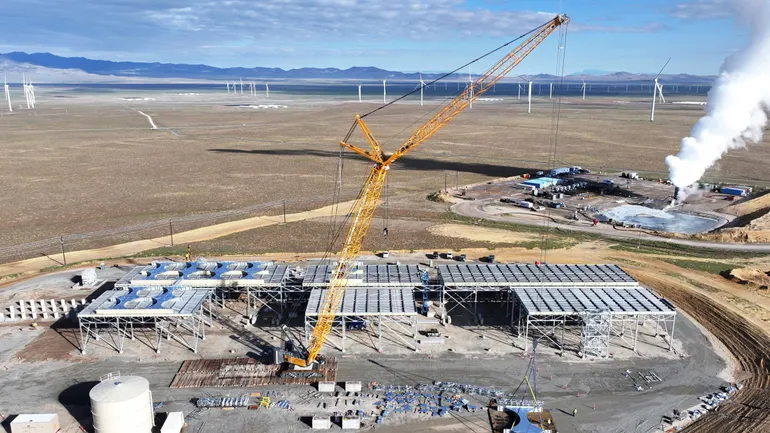
For instance, Microsoft has partnered with Constellation Energy, aiming to restart the Three Mile Island nuclear unit, while Google has secured a deal with Fervo Energy to support geothermal energy under a newly approved Clean Transition Tariff in Nevada.
Barua noted that the tech companies are taking significant risks in these partnerships, which protects non-participating customers by ensuring costs are managed effectively. Furthermore, small modular reactors are garnering interest from hyperscalers, as they occupy much less space than traditional nuclear plants. However, no SMRs are currently operational in the U.S.
The report outlines three essential features of effective clean energy tariff designs: costs are shared only among participating customers, they incorporate capacity value into rate structures, and they provide the long-term revenue predictability necessary for significant investments.
The authors of the report also pointed out a growing connection between large load tariffs and clean energy tariffs. New state-level large load tariffs are setting minimum demand charges and long contract terms to safeguard ratepayers. These clean energy tariffs are building on those foundations to align load growth with new energy capacity.
Barua observes that large customers are now considering a wider range of clean technologies compared to five years ago, driven by the urgent need for additional capacity. This shift has led to innovative partnerships between customers and utility companies.
For example, in Minnesota, Google and Xcel Energy took advantage of the Clean Energy Accelerator Charge, a specific green tariff, to deploy a mix of resources including solar, wind, and the largest long-duration energy storage system to date. Barua emphasizes that while Google is assuming some risk, these projects promise significant benefits to the energy system.