

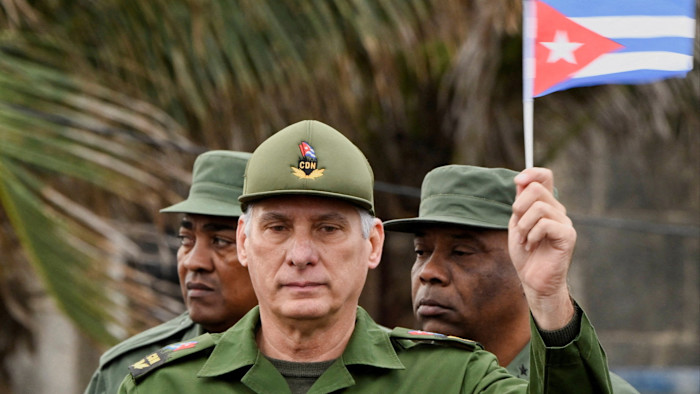
Cuban President Miguel Díaz-Canel has announced that Cuba is engaging in discussions with the US government to explore solutions to the ongoing energy blockade affecting the island. In a televised address on Friday, he emphasized that these talks are part of a sensitive approach aimed at addressing the diverse challenges faced by both nations.
Díaz-Canel highlighted the complexities of Cuba’s energy needs, pointing out that recent developments have severely limited the nation’s oil imports. This includes the shift in Venezuela’s political landscape, which previously allowed Cuba to receive essential oil supplies, and pressures on Mexico to reduce its own exports to the island.
He also noted that the dialogue with the US is still in its early stages and reasserted the Cuban government’s stance against any discussions that would require political reforms in a one-party system.
The announcement followed Cuba’s recent decision to release 51 prisoners, a gesture of goodwill linked to discussions between Cuban Foreign Minister Bruno Rodríguez and Pope Leo at the Vatican.
US President Donald Trump stirred controversy last month with remarks suggesting a potential “friendly takeover” of Cuba, citing the island’s financial struggles. He mentioned how US Secretary of State Marco Rubio is in high-level talks regarding the situation.
In the meantime, Cuba’s energy crisis continues to deepen. With supplies dwindling, hospitals are operating at reduced capacity, and daily blackouts have become commonplace. The country is also facing challenges with its transport system, as a lack of fuel has resulted in extensive wait times for drivers. Economic hardships have been exacerbated by a decline in tourism and contracts with international partners, limiting available foreign currency for imports.
In response to the energy crisis, Díaz-Canel has mentioned plans to incorporate solar energy solutions—highlighting recent imports of solar panels—and aims to increase domestic oil and gas production, which currently falls short of meeting national demands.