

Iran is trying to entice Donald Trump with financial opportunities tied to its oil and gas reserves. This move is part of a broader effort to persuade the U.S. President to agree on a deal regarding its nuclear program, which could help avoid conflict.
A source close to the discussions described the situation as a “commercial bonanza,” with hopes that Trump will be drawn in by lucrative options that promise benefits for the U.S. This strategy reflects Iran’s understanding of Trump’s fondness for deals that yield returns.
Iran’s Foreign Minister, Abbas Araghchi, is set for more indirect talks with U.S. officials Steve Witkoff and Jared Kushner in Geneva. However, a senior U.S. official clarified that no specific commercial offer has been made yet. The official reiterated Trump’s firm stance: Iran cannot obtain nuclear weapons.
The potential investment opportunities are particularly tailored to Trump, focusing on major returns in oil, gas, and mining. There’s been informal discussion about Iran possibly offering U.S. investment opportunities in these resources, yet no formal proposal has been put forward to Washington.
Iran appears to view the recent economic interactions between the U.S. and Venezuela as a model, especially given Trump’s push for U.S. companies to engage in oil deals there.
This initiative is seen as part of Iran’s attempt to show Washington its commitment to negotiations, especially as tensions rise under Trump’s administration. There are concerns from Iranian officials about escalating responses should conflicts arise, moving away from their previous limited retaliation stance.
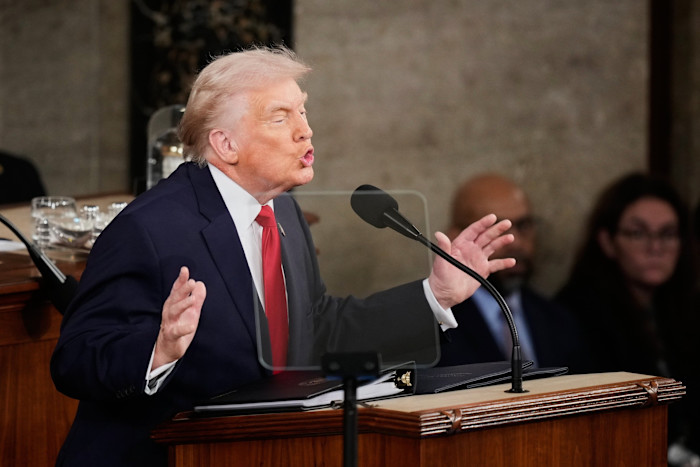
Trump has ramped up military presence in the Middle East, warning Iran that it has only a limited window to reach an agreement before facing severe consequences. In his State of the Union address, he condemned Iran’s nuclear ambitions and emphasized that he doesn’t want them to become a nuclear threat.
Iran claims its nuclear program is for peaceful purposes, although it was enriching uranium close to weapons-grade levels before attacks on its nuclear facilities last year.
Iran is also considering a verification mechanism for its nuclear activities that could involve U.S. representatives, showing a willingness to cooperate further.
Araghchi emphasized Iran’s commitment to never developing nuclear weapons and aims for a fair and swift deal. He also highlighted a unique chance for a significant agreement that fulfils both nations’ concerns.
Iran’s foreign ministry spokesperson hinted at discussions surrounding potential collaboration in oil, gas, and technology sectors, emphasizing the country’s significant energy reserves.
Iran ranks as one of the world’s top oil and gas holders, including sharing a major natural gas field with Qatar. Conversations have also touched on mutual interests in oil, gas, and even civilian aircraft purchases.
Past agreements, like a deal with Boeing for jets, fell through after the U.S. withdrew from the nuclear deal in 2018, imposing heavy sanctions that isolated Iran economically.
As part of any future agreement, Iran would seek the lifting of sanctions and the release of its oil revenues held abroad. The Trump administration has engaged in recent discussions with Iran, but key issues remain unresolved, particularly regarding uranium enrichment.
U.S. officials have indicated some flexibility could exist regarding enrichment levels, but the matter remains contentious, with Iran steadfastly stating its right to enrich as part of international treaties.
Araghchi recently clarified that no suspension of enrichment has been offered or requested, while Trump’s negotiators have set strict conditions, including demands around enriched uranium stockpiles.
This complex dynamic continues as both nations navigate the challenging terrain of nuclear negotiations amid rising tensions.