

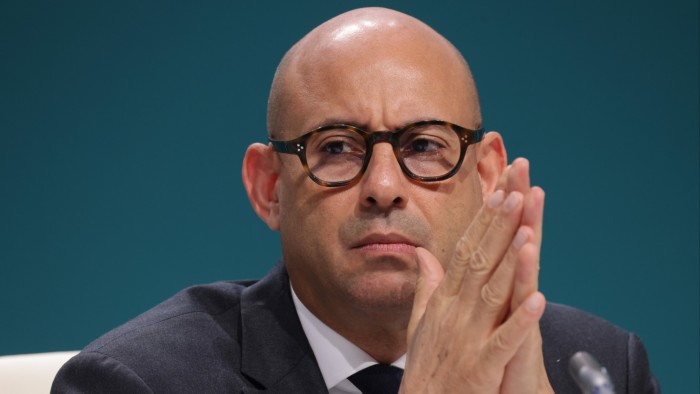
The head of the UN’s climate change division has called on European nations to enhance their efforts in combating global warming, especially at a time when security funding is gaining focus. Concerns are rising that the EU might neglect environmental initiatives as countries work to bolster their military capabilities.
As various European governments reduce their aid budgets, take on more debt, and seek new financial strategies to arm themselves in response to US President Donald Trump’s threats regarding NATO, there are fears around potential cuts to climate funding.
Simon Stiell, the UN’s climate chief, emphasized the urgency of the climate crisis as a national security issue that should take precedence in every cabinet discussion. He highlighted that Europe faces the risk of an influx of climate refugees, driven by uninhabitable conditions in other regions that could lead millions to migrate.
He noted that the repercussions of climate change won’t be limited to outside Europe; they will increasingly affect European borders. His remarks were made at the Europe 2025 conference in Germany.
Stiell pointed out that while Trump has rolled back many climate policies, this presents an opportunity for European nations to assume “climate leadership.” He referred to Germany’s recent defense spending plans that incorporate climate-related measures as a way to merge security and environmental initiatives.
His speech came shortly after UN Secretary-General António Guterres urged EU leaders to refrain from requesting rebates from the UN this year due to the halt in contributions from the United States.
Climate ministers from more than thirty countries convened in Germany this week for significant discussions, marking the first such meeting since the UN COP29 summit in Baku the previous November. Notably, the US was not in attendance.
Stiell, who participated in these talks, warned that failing to address climate change could lead to a 1% decline in the EU’s overall GDP in the near term, potentially worsening to a 2.3% decline by mid-century, creating an environment ripe for a prolonged recession. The previous year was reported as the hottest on record.
The EU is set to present a new climate plan this year to the UN, outlining its emission reduction targets for 2035. Concerns have grown about announcing these targets before the upcoming Polish elections in May, fearing backlash from voters against aggressive climate actions.
Stiell further asserted that well-designed decarbonization strategies can attract substantial capital investments, echoing insights from a significant report by former Italian Prime Minister Mario Draghi, emphasizing clean energy investment as vital to the EU’s energy security and economic stability.
He concluded by stating that a robust national climate plan would offer the strongest economic security guarantees for Europe.