

The Democratic Republic of Congo, which holds about 75% of the world’s cobalt supply, recently decided to pause its cobalt exports for three months. This move comes as cobalt prices have dropped significantly, and it may not be enough to change the current trend in the cobalt market.
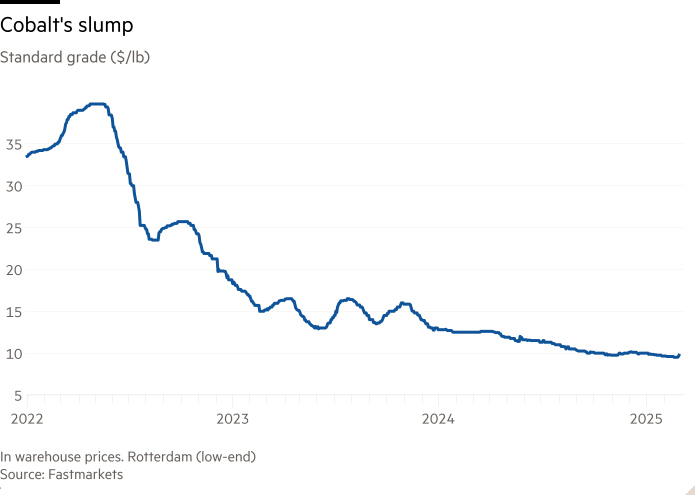
Cobalt, a crucial component in many technologies including smartphones and electric vehicle batteries, saw its prices rise to approximately $40 per pound last year, a situation that benefited producers like Glencore. However, in 2023, the landscape changed significantly. China’s CMOC has overtaken Glencore, ramping up its production of cobalt to 114,000 tons in the past year, well above its initial forecasts.
Cobalt inventories have been increasing as well; recent reports indicated that warehouses were holding around 128 metric tons, with a large portion likely stored in China. Despite the recent price slump, which is now about 25% of last year’s peak, CMOC remains optimistic about its production goals, anticipating output of up to 120,000 tons this year, even after the export halt.
The firm operates with a low-cost model, and since cobalt is obtained as a byproduct of copper mining, the expenses associated with its production are minimal. CMOC is further bolstered by its ownership ties with CATL, the world’s leading electric vehicle battery manufacturer. CATL not only holds a significant stake in CMOC but also has invested in one of its mines.
While the suspension of exports may seem like a significant action, it’s not a strong solution. The Congolese government faces challenges in enforcing the ban due to porous borders, particularly with ongoing tensions with Rwanda. Additionally, cobalt production is also increasing in other countries, including Canada and Indonesia, which sources cobalt from nickel.
On the demand front, automotive companies are shifting away from traditional cobalt-rich batteries to alternatives like lithium-iron-phosphate (LFP) batteries. These newer batteries, which are becoming more popular due to their longer lifespans and lesser environmental impact, currently offer lower energy density but are expected to improve over time.
Overall, these factors suggest that the situation for the Democratic Republic of Congo regarding cobalt exports may not improve in the near future. History shows that resource extraction often favors those doing the mining, and despite evolving technology, the dynamic remains largely unchanged in the global south.