

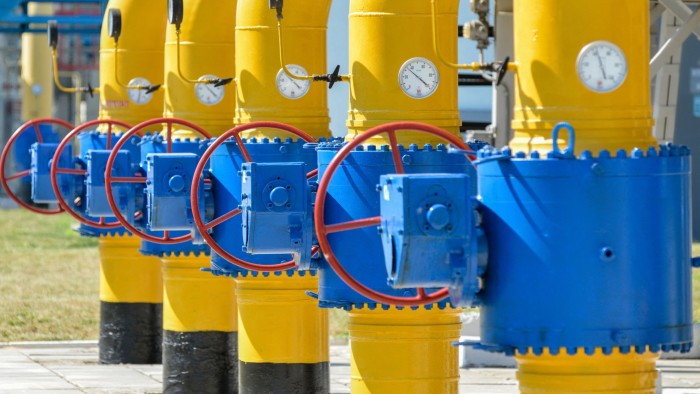
Gas shipments from Russia through Ukraine are expected to halt on Wednesday as the transit agreement between the two nations comes to an end, following Russia’s extensive invasion that began nearly three years ago. This pipeline was one of the last routes still delivering Russian gas to Europe, and its closure during the winter season will result in EU nations losing approximately 5% of their gas imports.
Traders have been anticipating this disruption, which will significantly impact Europe’s gas supply at a time when heating needs are high, particularly affecting Slovakia the most. Aldo Spanjer, a senior commodities strategist at BNP Paribas, noted that while traders had factored in the loss of these gas volumes, an initial rise in gas prices is still possible.
The agreement allowing Russian gas to transit through Ukraine was finalized in late 2019 and was seen as a vital measure to ensure supply amidst increasing tensions. However, after Russia launched its full-scale invasion of Ukraine in 2022, the European Commission encouraged EU nations to find alternative gas supplies to reduce dependency on Russian fossil fuels. This shift has been met with resistance from Hungary and Slovakia, which have been pushing to extend the transit agreement beyond its expiration in January.
Despite Ukraine indicating months prior that it was unwilling to negotiate a deal extension, aiming to cut off Russian income from gas exports, this decision poses financial consequences for both nations. Russia is expected to suffer a loss of about $6.5 billion unless it can redirect its gas supplies. Meanwhile, Ukraine historically earned approximately $1 billion a year in transit fees, with only a portion being profit. Analysts warn that without Russian gas flowing, the pipeline infrastructure in Ukraine could become increasingly vulnerable to attacks.
Slovak Prime Minister Robert Fico traveled to Moscow previously to discuss the situation, criticizing Ukraine’s stance and expressing concern over its economic implications for Slovakia. He has claimed that alternatives to Russian gas were presented to Ukraine but were rejected. Fico even hinted at the possibility of halting electricity supplies to Ukraine in response.
Similarly, Hungary’s Prime Minister Viktor Orbán has sought ways to facilitate Russian gas imports via Ukraine, and the country continues to explore pipelines supplying gas through Turkey and Romania as alternatives.
Austria, which continued to import Russian gas through 2024, is also shifting to other sources, including liquefied natural gas (LNG), after concluding a long-term contract with Gazprom due to legal disputes.
The disruption in gas flows will significantly affect Moldova, which has declared a state of emergency in its energy sector amid uncertainties surrounding gas supplies. The end of Russian gas deliveries is likely to elevate European demand for more expensive LNG, amidst competition from Asia.
EU officials maintain confidence that the bloc can manage without Russian pipeline supplies, even if it means relying more heavily on expensive imported gas from other sources. They emphasized that Europe’s gas infrastructure has been enhanced to accommodate non-Russian supply routes since 2022.
While the Turkish pipeline continues to facilitate some gas transport from Russia to Europe, contributing around 5% to the EU’s imports, recent sanctions targeting Gazprombank, a key player in Russian energy transactions, have added tension to the situation. However, Russian President Vladimir Putin has removed the requirement for foreign buyers to use this bank for payments, easing some concerns for countries like Turkey and Hungary, which reportedly have secured exemptions from the sanctions.
Gas prices in Europe have seen volatility influenced by sanctions and the ongoing uncertainty regarding the availability of Russian supplies. Some traders speculate that if energy prices remain high, European companies may eventually resume buying Russian gas, considering it cheaper than LNG once a peace agreement is reached and the conflict sees resolution.