

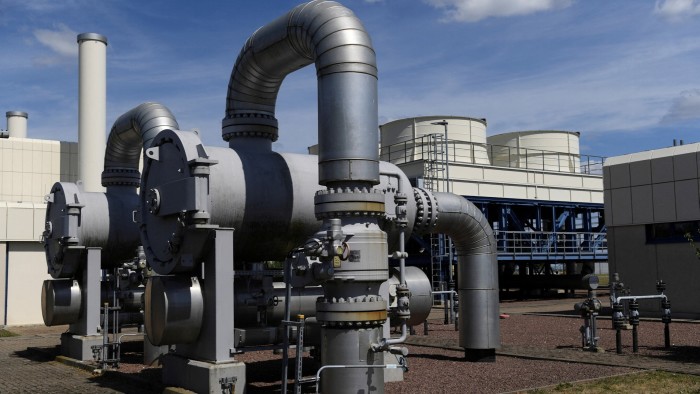
The European Union is facing a rapid decrease in its gas storage, with levels dropping at the fastest rate since the energy crisis began three years ago. As colder weather increases demand, the amount of gas stored in the EU has fallen by approximately 19% from the end of September to mid-December, based on data from Gas Infrastructure Europe.
In previous years, gas storage levels saw only minor reductions during this time, largely due to warmer temperatures and a decrease in industrial demand amidst high prices. According to Natasha Fielding from Argus Media, Europe is relying more than ever on its underground reserves to compensate for lower liquefied natural gas (LNG) imports and rising demand.
Adding to the challenge, countries in Europe are facing stiff competition for LNG supplies from Asian markets, which are currently paying lower prices. This has resulted in decreased LNG imports, forcing countries to rely significantly on stored gas. The rate of withdrawal from storage this December resembles levels seen in 2021, at which time Russia was reducing its pipeline gas supplies.
Currently, the EU’s gas storage levels are around 75%, which is just above the average from the past decade, but significantly lower than the nearly 90% levels recorded in mid-December last year.
European gas prices have decreased to about 90% less than the peak rates of over €300 per megawatt-hour witnessed during the height of the energy crisis in summer 2022. However, the ongoing withdrawal of stored gas through the winter could complicate the process of replenishing stocks for the following year.
Traders are already indicating that gas prices for delivery next summer are higher than those for upcoming winter deliveries, suggesting that refilling may become more costly. Under a European Commission mandate, EU nations are required to fill their storage to 90% capacity by early November, although some nations have lower targets.
A significant portion of the EU’s gas supply now comes from LNG, a situation that has become politically charged in recent weeks. Discussions have emerged regarding US gas purchases and Qatari concerns over new EU legislations affecting energy import dynamics.
Additionally, cold weather conditions have further strained gas supplies, particularly during periods known as Dunkelflaute, when renewable energy sources like solar and wind are not producing power, leading to higher gas demand for electricity generation.
Between January and November this year, the demand for industrial gas in several north-west European countries increased by 6% compared to previous lows. Countries are experiencing differing rates of gas withdrawal, with the Netherlands reporting a 33% drop and France observing a 28% decrease in stored gas.
Compounding these issues, Russian gas imports through Ukraine are expected to halt by the end of next year, as an important transit agreement expires, impacting about 5% of the EU’s gas imports. However, industry sources believe the situation is not dire, as many are adjusting to the circumstances.