

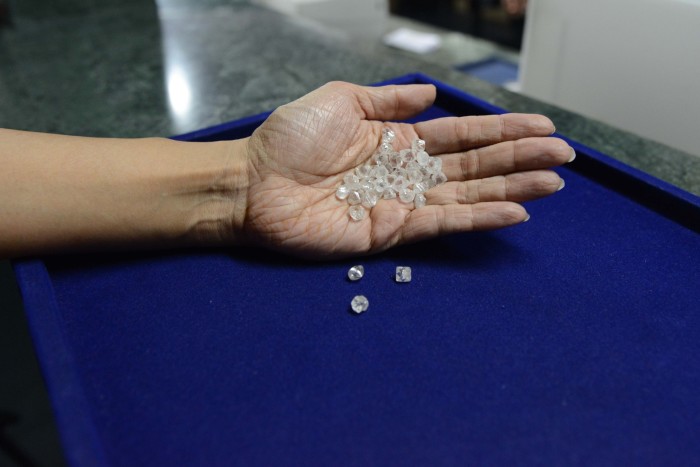
De Beers Group is facing a significant challenge as it holds its largest diamond inventory since the 2008 financial crisis. This large stockpile highlights the difficulties in rekindling interest in diamonds, which have long been regarded as symbols of luxury.
Demand for diamonds has decreased, particularly in China, and the competition from lab-grown alternatives is growing. Additionally, the lasting effects of the pandemic, which saw a decline in marriages, have further impacted the market. Currently, De Beers has around $2 billion worth of diamonds in stock, a figure that has remained stable throughout the year.
Chief Executive Al Cook remarked, “It’s been a bad year for rough diamond sales,” emphasizing that the ongoing decline in demand, exacerbated by the pandemic, has compelled the company to reduce its diamond output by approximately 20% compared to the previous year. They have also lowered prices at recent auctions.
These auctions are where uncut diamonds are sold to an exclusive group of about 50 certified buyers, known as sightholders, who are influential players in the industry. De Beers, with a workforce of around 20,000, has been a major entity in the $80 billion diamond jewelry market since its inception in the late 1800s. Its revenues saw a drop from $2.8 billion in the first half of 2023 to $2.2 billion this year.
Meanwhile, Alrosa, De Beers’ main competitor from Russia, faced sanctions from G7 nations due to the ongoing Ukraine conflict, further shaking up the market.
As De Beers prepares for a separation from its parent company, Anglo American, following a failed takeover bid, it seeks to enhance its marketing efforts. Cook mentioned that the company plans to invest more in advertising and retail operations, aiming to expand its store count to 100 worldwide, up from 40 currently.
“We’re gearing up for a significant marketing campaign, reminiscent of our historical advertising,” Cook added, noting that as De Beers moves toward independence, it has the opportunity to focus as much on marketing as it does on mining.
Demand in China has been weak, with local jewelers resorting to exporting polished diamonds to manage their inventories. The rise of lab-grown diamonds, which are much cheaper, poses additional challenges, particularly in the United States, the largest diamond market.
Despite the current struggles, Cook remains optimistic, suggesting that a “gradual recovery” could be on the horizon globally, especially in the US. Recent credit card data indicated a slight increase in jewelry purchases, a potential sign of market rebound.
Analysts forecast a continued decline in De Beers’ rough diamond sales, estimating a drop of about 20% this year, following a 30% fall last year. However, they also project a 6% increase in global diamond jewelry sales to $84 billion next year, predominantly due to the low sales base.