

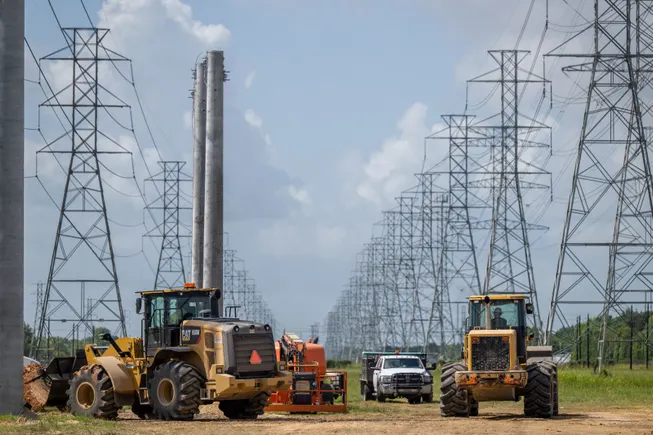
A recent draft report from the U.S. Department of Energy highlights that enhancing interregional transmission and collaborations among grid operators can significantly reduce transmission congestion and improve resource availability.
The report noted that congestion costs across the U.S. rose to $12 billion in 2024 from $11 billion the previous year, although this figure is down from a peak of $21 billion in 2022, partly due to high gas prices and extreme weather events. The DOE anticipates that these costs will continue to climb.
The analysis in the report, sourced from the Lawrence Berkeley National Laboratory, emphasizes the value of establishing more transmission connections, particularly between the Electric Reliability Council of Texas and its neighboring regions, as well as between the Eastern and Western parts of the grid.
Additionally, there is significant potential for cost savings by increasing transmission capacity in specific areas. For example, increasing connections between NorthernGrid and WestConnect in the West and between ISO New England and the New York Independent System Operator in the Northeast could prove beneficial.
Notably, the Southeast region, which lacks a structured wholesale power market, stands to gain approximately $10/MWh by expanding transmission capacity with its neighbors. The report highlights interregional links, especially between Southern Company and Florida, Duke Energy and the PJM Interconnection, and the Tennessee Valley Authority and the Midcontinent Independent System Operator’s southern region, as areas with the highest potential value for reducing congestion in recent years.
The Southeast, however, has not yet addressed key “transmission needs” identified in the DOE’s assessment. These needs include enhancing reliability, decreasing grid congestion, increasing transfer capacity with neighboring regions, and ensuring resource adequacy through improved interregional transfer capacity.
The DOE’s National Transmission Needs Study is conducted every three years, guiding future planning for both regional and interregional transmission. From 2016 to 2024, the DOE found that, on average, 150 miles of interregional transmission was constructed annually, with most developments driven by incumbent utilities.
As the DOE continues to gather feedback on the draft report until September 7, these findings underline the importance of advancing transmission infrastructure for a more efficient energy future.