

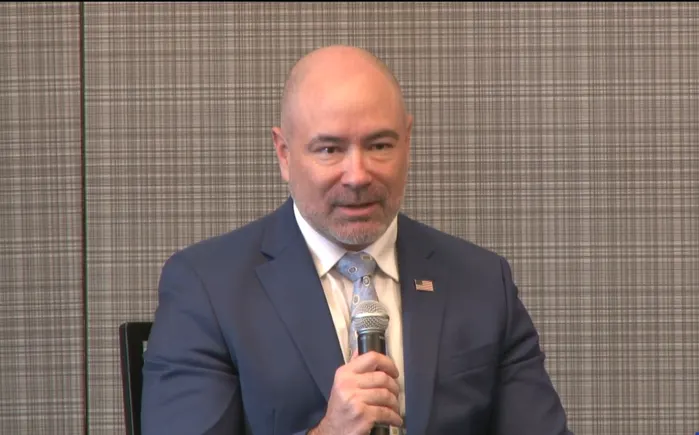
David LaCerte, a commissioner at the Federal Energy Regulatory Commission (FERC), highlighted significant concerns about PJM Interconnection, stating that the current situation is “untenable.” Speaking at a WIRES meeting in Philadelphia, he noted that PJM’s stakeholder process has become bogged down in gridlock.
FERC is set to hold a technical conference on July 23 to address PJM’s governance issues. This meeting aims to explore actionable reforms that could improve the stakeholder process, making it more efficient for critical matters.
LaCerte pointed out that some participants use the stakeholder process to prioritize their own business interests, which can negatively impact the broader region. He challenged those resistant to change, questioning how reliance on the current system would benefit them, especially regarding the capacity price collar.
He emphasized the need for PJM to evolve, noting that other regional transmission organizations (RTOs) and independent system operators (ISOs) across the country operate more effectively. LaCerte urged that it’s essential not to let a few stakeholders dictate the economic direction of an entire region.
As the largest grid operator in the U.S., PJM oversees the grid and wholesale power markets across 13 mid-Atlantic and Midwestern states and the District of Columbia.
FERC Considers Improving Transmission Incentives
In addition to discussing governance reforms, FERC is also contemplating adjustments to the incentives designed to promote transmission development. LaCerte expressed the need for these incentives to be more targeted, ensuring that resources are not wasted.
Currently, FERC offers various benefits for transmission developers, such as an increased return on equity for members of a regional transmission organization. However, LaCerte criticized the practice of setting incentive structures and neglecting to revisit them for long periods, asserting the need for regular evaluations.
He highlighted the importance of ensuring that these incentives lead to clear outcomes, stating that FERC needs to be more focused on achieving results. Revamping these incentives is complex, likening it to landing a helicopter on a tiny landing pad in the ocean.
To help maintain low electricity prices, LaCerte said FERC will continue to explore advanced transmission technologies, also known as grid-enhancing technologies. He stressed the importance of assessing the cost-effectiveness and readiness for deployment of these technologies, such as dynamic line ratings, to improve transmission efficiency.