

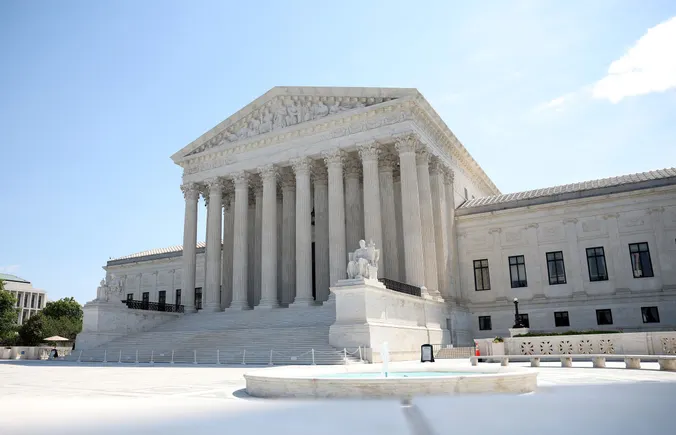
The independence of the Federal Energy Regulatory Commission (FERC) could face significant changes following the Supreme Court’s decision in the case of Trump v. Slaughter, which enhances the president’s authority to remove regulators at will. This ruling has raised concerns among former FERC commissioners from both political parties.
In the court’s ruling, a 6-3 majority decided that the president was within his rights to dismiss Commissioner Rebecca Kelly Slaughter from the Federal Trade Commission. Legal experts believe this interpretation could extend to FERC and other federal agencies.
Former commissioners fear this ruling might lead to a lack of quorum at FERC, making it difficult to issue critical orders. They worry such changes could create instability in energy policy depending on which political party holds power after elections, negatively affecting electricity markets and the economy.
“Independent regulatory agencies ensure informed oversight of competitive companies,” warned Jon Wellinghoff, a former FERC chair. He emphasized that a lack of independence could leave consumers vulnerable to the downsides of competitive markets without sufficient regulatory protection.
Neil Chatterjee, another former FERC chair, echoed these concerns, stating that FERC has traditionally provided much-needed stability for long-term investments. He noted that uncertainty regarding FERC’s direction could ultimately harm national interests.
Chief Justice John Roberts stated in the ruling that the president must be able to choose and dismiss officials to maintain accountability. However, Justice Sonia Sotomayor, dissenting, argued that this decision undermines the historical importance of maintaining independent agencies to balance executive power.
The impact of this ruling is uncertain for now. Both Chatterjee and Richard Glick, another former FERC chair, indicated that recent decisions from the commission have been unanimous and do not suggest the dismissal of any current commissioners. However, they expressed concern that over time, the new power to remove commissioners could deter qualified candidates from serving and disrupt FERC’s functions as envisioned by Congress.
Former Commissioner Allison Clements noted that the fear of losing quorum could undermine investments in the energy sector. She stressed that even the threat of potential dismissal could diminish confidence in FERC’s stability, complicating necessary investments.
Glick also highlighted the potential ramifications of a president choosing to ignore the requirement for political balance on the commission. He argued that this could lead to a lack of diverse viewpoints and critical dissenting opinions that are essential in regulatory debates.
Overall, former commissioners stress the importance of FERC’s independence to prevent unpredictable swings in policy based on political changes, which could create a challenging environment for the energy market and economic stability.