

German startup Proxima Fusion is making headlines after securing €400 million in funding from Bavaria to develop a €2 billion test facility. This project represents one of Europe’s most ambitious steps toward harnessing fusion energy, a technology that remains largely unproven.
Located in Munich, Proxima has signed an agreement to build the test plant just north of the city, with hopes of eventually establishing Europe’s first commercial fusion reactor, provided the trials yield positive results.
Under the agreement, both Proxima and Bavaria will cover 20% of the total facility cost, while the federal government in Berlin is expected to contribute the remaining €1.2 billion.
In a promising development, RWE, Germany’s largest electricity producer, has offered the site of its decommissioned nuclear power station in Gundremmingen for potential use as a commercial fusion plant. Proxima’s CEO, Francesco Sciortino, has expressed ambitions to complete the commercial plant during the 2030s.
Unlike traditional nuclear fission, which splits atoms to release energy, fusion aims to replicate the process that powers the sun by merging atomic nuclei in a superheated state. The test plant’s main goal is to achieve a critical milestone known as net energy gain. This is where more energy is produced from fusion than what is needed to maintain the plasma, with hopes to demonstrate this by the early 2030s.
The announcement follows growing concerns that Europe is lagging in the global race for fusion energy. Last year, U.S. fusion ventures attracted an impressive $1.6 billion in private investments, while China is believed to be increasing both state and private funding significantly.
Europe’s challenges stem partly from the Iter project in France, which has experienced engineering delays. A significant portion of the EU’s fusion budget has been allocated to this initiative, adding to the difficulties faced in advancing fusion technology on the continent.
Germany is now trying to take a more proactive stance in this field, especially as it seeks alternative energy solutions after stepping away from traditional nuclear power. Chancellor Friedrich Merz has previously stated his ambition for Germany to host the world’s first commercial fusion reactor.
In line with this vision, Berlin has put forth a “Fusion Action Plan,” committing over €2 billion by 2029 to support the German fusion industry, including a budget of €755 million dedicated to the development of a pilot plant. Bavaria, along with Hesse, stands out as a fervent supporter of fusion technology.
Despite the promising investment, some in the sector remain skeptical. A competitor suggested that obtaining €1.2 billion in federal funding might be unrealistic, despite the encouraging €400 million commitment from Bavaria.
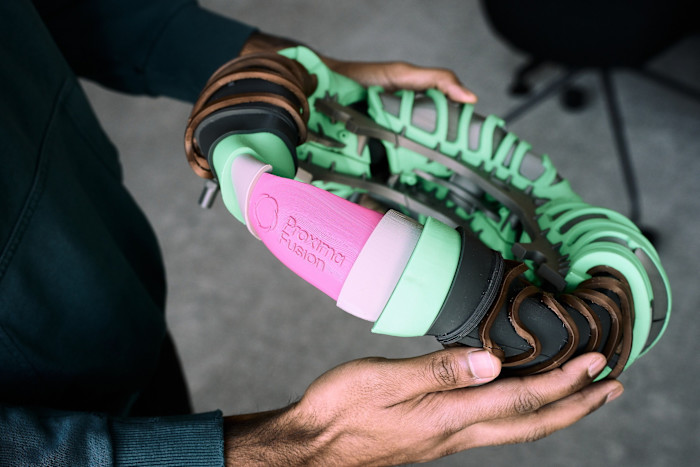
Proxima distinguishes itself by opting for a stellarator design rather than the more commonly used tokamak method to contain plasma. While tokamaks are simpler, stellarators offer potential advantages in maintaining plasma stability, which has been a significant challenge for fusion development.
However, the future of Proxima’s plans hinges heavily on that sought-after €1.2 billion federal funding. Even if they navigate the engineering hurdles, substantial additional investment will be crucial to turn the project into a commercially viable operation—something many skeptics believe remains many years away.
Sciortino remains hopeful, saying that if they fail to secure the necessary funding, they might have to abandon the plan, but he feels optimistic due to the supportive political climate. He anticipates that the German government’s review process for investment projects will be completed by year’s end.