

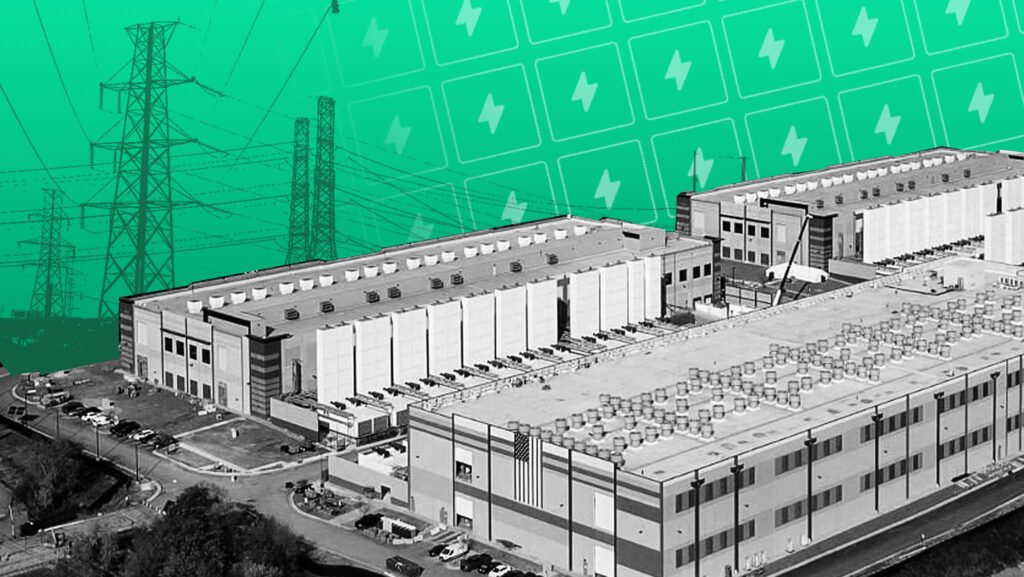
Utility companies are increasingly relying on “demand response” strategies that ask businesses to reduce their energy use during peak times.
Data centres, especially those used for training AI models, often operate at full capacity. This can lead to conflicts with residential energy consumption during busy periods, raising the risk of power outages.
Firms like OpenAI are urging US regulators to expedite the approval process for flexible data centres, claiming it could lower costs for all users.
“We need to be smarter about utilizing the unused capacity in the grid,” noted Daniel Eggers, executive vice-president at Constellation, which provides power to two million homes and businesses in the US.
A study from Duke University suggested that if data centre operators limited their energy use just 0.25% of the time, the grid could handle an additional 76GW of demand. However, they emphasized that this wouldn’t eliminate the need for new energy facilities.
Brandon Oyer, head of energy and water for North America at Amazon Web Services, mentioned that while the company could manage some temporary cutbacks, it wouldn’t consider it a wise strategy in the long run. “Some customers might adapt, while others may struggle. It’s a complex issue,” he said.
A Bumpy Road Ahead
The big challenge for major data operators is that these temporary solutions may not suffice to power the new data centres expected in the coming years.
As a result, some projects could fall through as they fail to meet contractual obligations. Others may have to wait for electrical grid upgrades and new energy sources before proceeding.
In the intense competition for AI advancements, outdated grid infrastructure could delay progress by years.
For some, the energy crunch alleviates fears of oversupply; for tech companies and stakeholders, it could jeopardize significant investments.
“We might not meet the timelines that data centre operators expect… they won’t be able to connect until the resources are available,” warned Robb from NERC. “It’s going to be a tense journey ahead.”