

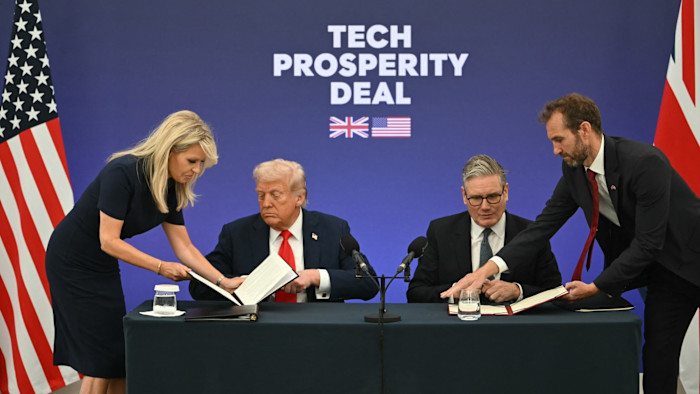
London and Washington are cautiously resuming discussions on their ambitious “tech prosperity deal,” which was put on hold last year due to pressures from then-President Donald Trump. This deal aims to enhance collaboration in sectors like artificial intelligence, quantum computing, and nuclear energy.
Recently, senior officials from both nations have started talking about working together on civil nuclear technologies and the potential for a joint summit focusing on fusion technologies. Sources close to the negotiations described these efforts as beginning to show promise.
Initially announced during Trump’s state visit in September, the tech deal sought to foster innovation and improve regulations for new energy projects. UK Prime Minister Sir Keir Starmer hailed this as the dawn of a “golden age of nuclear” energy, allowing faster approvals for atomic initiatives.
However, the agreement was halted in December when American officials expressed concerns over broader trade issues, demanding concessions that went beyond the scope of technology.
At the World Economic Forum in Davos, Varun Chandra, the UK Prime Minister’s special envoy for trade and investment, met with Jamieson Greer, his US counterpart. They agreed to renew discussions on the nuclear aspects of their cooperation.
While talks on the nuclear sector are progressing, discussions surrounding areas like AI and quantum computing have seen little movement. In September, Starmer mentioned that the tech agreement would streamline the licensing process for new power stations, reducing the typical wait time from three or four years to about two.
One development in this area involves a partnership between UK energy company Centrica and US-based X-energy to construct advanced nuclear reactors in Hartlepool. Rolls-Royce also announced that it is entering the US regulatory landscape for small modular reactors.
The deal faced obstacles when US officials were frustrated with the UK’s reluctance to address non-tariff barriers in broader trade talks. Despite allowing a limited quota of US beef to enter the UK tariff-free, both sides aim to enhance cooperation on agricultural market access.
Officials involved in the recent discussions believe that Trump’s recent decision to impose a global tax won’t impede progress on the tech deal.
A spokesperson for the UK government affirmed their commitment to working closely with the US on the Technology Prosperity Deal, aiming to foster the development of future emerging technologies and provide secure energy solutions for families.