

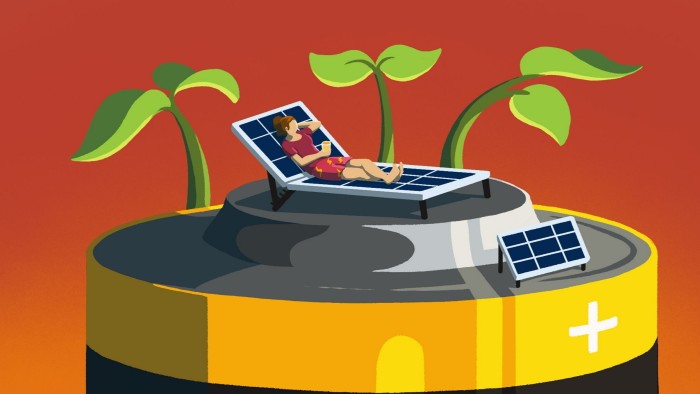
In a remarkable shift, Mark Purcell, a retired Australian navy rear admiral, has transformed his monthly electricity expenses into a profit. Previously, he spent about A$250 for energy in his spacious Queensland home. Now, thanks to solar panels and batteries, he earns around A$300 monthly from the electricity he generates and sells. “This is the future,” Purcell states enthusiastically about the potential of energy transition for many families.
Purcell is among over 58,000 customers of Amber Electric, a Melbourne-based company that has been operating for eight years. It enables homeowners to tap into real-time wholesale power prices, allowing them to use energy when it’s cheaper and sell stored energy when prices rise. The company’s customer base is expanding rapidly, adding about 5,000 users each month, making it a key player in the energy tech sector not only in Australia but also internationally.
Amber Electric is preparing to launch its dynamic pricing technology in the UK, partnering with energy suppliers like Ecotricity and E.On. Similarly, Norway’s Tibber has captured the interest of around one million customers since 2016, expanding into Germany, Sweden, and the Netherlands.
In Germany, newer companies such as Tibber, Octopus Energy, and Rabot Charge have seen their market share increase significantly, from 0.1% in 2023 to 2.4% in 2025, according to the Kreutzer Consulting group. These providers boast a higher customer satisfaction rate—77%—compared to the industry average of 57%.
As energy tech entrepreneurs showcase how renewables can make electricity more affordable, it becomes essential to reevaluate the narrative around net-zero policies. Amber Electric’s success is no coincidence; Australia is leading the world in the adoption of rooftop solar systems, with more than four million installed. The country’s population of 28 million is also seeing a surge in home battery systems, supported by recent government subsidies.
Experts estimate that rooftop solar can save households up to A$1,500 a year, and that figure can nearly double with battery installation, further enhanced by dynamic pricing. The increase in rooftop solar contributed 13% of Australia’s electricity in the first half of this year. With more home batteries and electric vehicles capable of sending power back to the grid, this cleaner energy source can reduce pressure on existing power grids, potentially delaying the need for new power plants and infrastructure.
However, there are barriers to entry. Purcell has invested considerable funds into solar panels, batteries, and a home energy management system. While this investment pays off for him, the initial costs remain a challenge for many. Thankfully, large hardware retailers are rolling out financing plans that allow families to pay small monthly fees for solar and battery setups, making it more accessible.
Challenges remain, particularly as the rise in renewable energy can lead to negative power pricing when supply surpasses demand. While this situation benefits users like Purcell, it raises concerns for renewable investors seeking stable returns. Additionally, wholesale energy prices can fluctuate unexpectedly, a risk that some dynamic pricing customers have faced. Amber Electric mitigates this risk with a hedging strategy that guarantees maximum pricing for users.
As the industry evolves, obstacles will likely arise. Traditional power companies may slow the rollout of smart meters needed for newer competitors, and not all markets are yet prepared for dynamic pricing.
The essential question remains: why would any policymaker want to hinder innovative technology that promises to make electricity more affordable and sustainable for millions, simply because it aligns with green initiatives?