

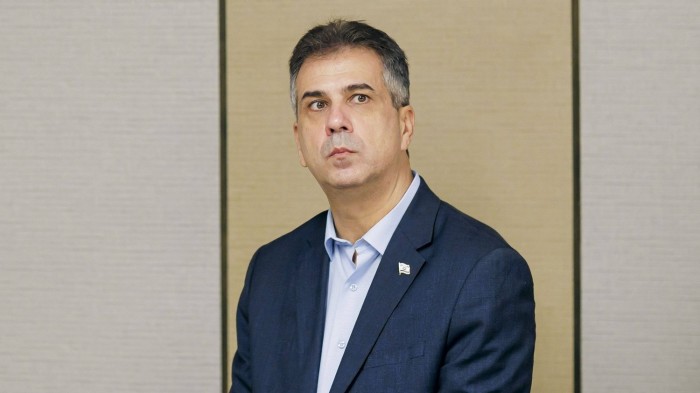
Israel’s energy minister, Eli Cohen, has paused the approval of a significant $35 billion natural gas deal with Egypt. He asserts that he is resisting US pressure in order to negotiate better terms for Israel.
This decision appears to have influenced US energy secretary Chris Wright, who has canceled an upcoming trip to Israel, signaling rising tensions between Israel and the Trump administration. The US has been advocating for Chevron, one of the partners in Israel’s Leviathan gas field, which is expected to supply the bulk of the gas to Egypt.
If finalized, the deal would nearly triple the flow of natural gas from Leviathan to Egypt, a nation that is increasingly reliant on Israeli energy at a time when sentiments among Egyptians are strained due to the ongoing conflict in Gaza.
Political relations between Israel and Egypt are further complicated. Cohen has openly called for the destruction of Gaza’s major cities, while Egypt’s President Abdel Fattah al-Sisi has condemned Israel’s actions as genocide, especially as Israeli forces move closer to the Gaza border.
Despite the friction, Egypt has been instrumental in mediating between Israel and Hamas, with its intelligence chief meeting recently with Prime Minister Benjamin Netanyahu.
Cohen’s office has stated that the deal will not proceed until they secure favorable pricing for the Israeli market. However, there hasn’t been any official response from Cohen regarding further inquiries about the situation.
NewMed, the company behind the deal, maintained that there had been no adjustments to the agreement, expressing confidence that all necessary approvals would soon be in place. Sources suggest that the disagreement mostly revolves around the pricing that NewMed is proposing for Israeli clients.
This deal, initiated in August, aims to supply an additional 7.5 billion cubic meters (bcm) of gas by 2029, with NewMed committing $2.5 billion for two new drilling ventures. The Leviathan gas field, co-owned by NewMed, Chevron, and Ratio Oil, is among the largest in the Mediterranean and is estimated to hold around 600 bcm of gas, with production anticipated until 2064.
Israel hopes to leverage its gas resources to establish stronger ties with neighboring countries, turning former adversaries like Jordan and Egypt into commercial partners and reinforcing its role as a significant energy player in the Mediterranean region.