

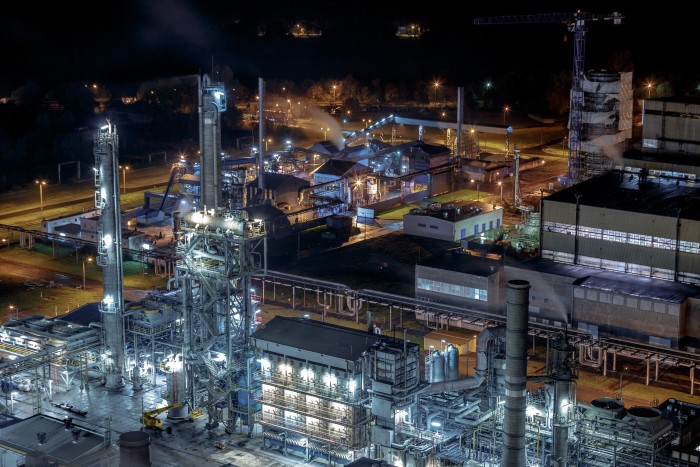
Poland’s largest chemicals firm, Grupa Azoty, is considering selling its German fertiliser unit as a way to improve its financial health amid ongoing challenges from competitively priced imports from Russia and Belarus.
In a recent interview, Chief Financial Officer Andrzej Skolmowski mentioned that the state-owned company hopes to achieve positive earnings before interest, taxes, depreciation, and amortization (EBITDA) this year. However, he acknowledged problems with cash flow and excessive debt. The firm reported a loss of 226 million zlotys (€53 million) for the third quarter, a significant improvement over a loss of 743 million zlotys during the same time last year.
Grupa Azoty’s situation reflects a broader trend in the European chemicals market, where many companies are facing declining demand and increased energy costs. Just last month, Dutch firm OCI announced the sale of its methanol operations as part of a restructuring effort. Similarly, major players like ExxonMobil and Sabic have closed several facilities in Europe, while the U.S. company LyondellBasell is reviewing its entire European operations.
Grupa Azoty has been strengthening its position as a key player in the European fertiliser sector, particularly after its purchase of the German firm Compo for €235 million in 2018. Still, Skolmowski indicated that the company may consider divesting Compo, although no final decision has been reached yet.
He remarked, “Compo was bought under different circumstances, and currently we are thinking more about cash flow. I can’t discuss the price of Compo, as it obviously hinges on the offers we receive.”
The financial struggles of Grupa Azoty have led the Polish government, led by Prime Minister Donald Tusk, to call for stricter European Union (EU) regulations on the export of potash from Russia and Belarus. Following Russia’s invasion of Ukraine in 2022, the EU imposed sanctions on this critical fertiliser ingredient. Discussions for tougher measures are ongoing but face opposition from several southern EU countries concerned about the cost implications for their farmers.
Skolmowski emphasized the importance of supporting EU fertiliser manufacturers, linking it to food security for the region.
After Tusk’s recent electoral victory and return to power in late 2023, Skolmowski was one of several senior executives reappointed to help revive Grupa Azoty. The firm currently has 11.5 billion zlotys in debt, a stark contrast to its debt-free status in 2015.
A significant portion of this debt is tied to an incomplete polymer production project near Police, which also encompasses port facilities. In September, Grupa Azoty entered talks with Orlen, the national oil and gas company, to assist in bringing this major project to fruition.
Though Orlen’s involvement may aid in completing the project, it also added to Grupa Azoty’s difficulties when it entered the fertiliser market during the previous administration, contributing to an oversupply in a small market.
As part of its restructuring efforts, job reductions are expected among its 14,500 employees, although Skolmowski stated that the specific number will depend on the future configuration of the company’s operations.
Since Grupa Azoty’s public listing on the Warsaw Stock Exchange in 2009, the Polish government has stepped in to protect the company from hostile takeover attempts, such as a failed bid by its Russian competitor Acron in 2012.
Despite Acron’s significant stake in Grupa Azoty, its owner Viatcheslav Kantor is currently under EU sanctions following the conflict in Ukraine, resulting in the Polish government freezing his shares in the company. Skolmowski noted that while Kantor has not acted against Grupa Azoty’s interests, they continue to compete in the marketplace.