

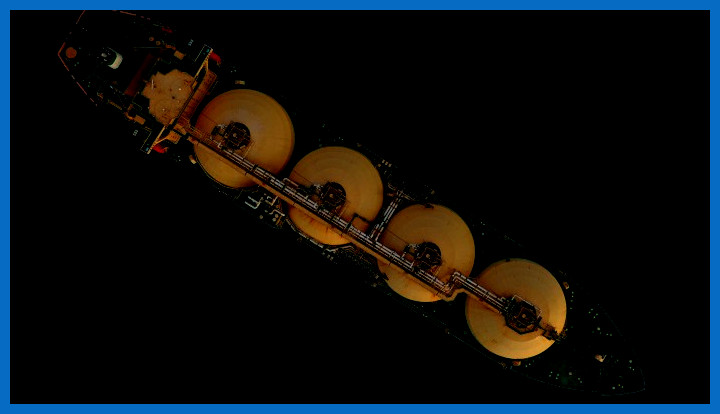
European Union (EU) imports of liquefied natural gas (LNG) from Russia have soared to an all-time high this year, despite the bloc’s efforts to reduce reliance on gas from the country amid the ongoing conflict in Ukraine.
From January to mid-December, Europe imported approximately 16.5 million tonnes of Russian LNG, surpassing last year’s total of 15.18 million tonnes and exceeding the previous record of 15.21 million tonnes set in 2022, according to data from Kpler, a commodities analytics provider.
Ana Maria Jaller-Makarewicz, an analyst at the Institute for Energy Economics and Financial Analysis, expressed surprise at this trend. “Instead of reducing Russian LNG imports, we are seeing an increase,” she noted.
Following Russia’s invasion of Ukraine in 2022, the EU set a goal to halt all imports of Russian fossil fuels by 2027. However, shipments of Russian LNG have continued to grow, highlighting the challenges Europe faces as it tries to wean itself off cheaper energy supplies.
While pipeline gas imports from Russia have significantly declined, and Russian oil and coal are banned in the EU, Russian LNG imports are still legal and on the rise. Jaller-Makarewicz emphasized that Europe’s increasing dependency on LNG indicates a “panicking” response as the region seeks to secure its energy needs.
This year, 33% of the EU’s Russian LNG imports were made through spot contracts, a rise from 23% the previous year, reported Rystad Energy, an energy consultancy. Some major companies, like Shell and Equinor, have stated they are not purchasing Russian LNG on the spot market, and many contracts include clauses to ensure the LNG is not of Russian origin.
However, spot trades have surged because Russian cargoes are often priced more competitively, according to Christoph Halser, a gas analyst with Rystad. He pointed out that LNG shipped from Russia’s Yamal terminal is considerably cheaper than gas from the United States.
Previously, Russia supplied about 40% of Europe’s gas, primarily through pipelines. Now, Russian gas—both LNG and pipeline gas—constitutes roughly 16% of the EU’s gas supply.
European officials remain confident that the EU can eliminate the need for Russian fuels, even if that means facing higher costs to source gas from elsewhere. Despite this, Russian LNG still made up 20% of the EU’s total seaborne LNG imports this year, up from 15% last year, with some of it being re-exported to other regions.
France has witnessed a nearly twofold increase in Russian LNG imports this year, with the majority of shipments arriving at the Dunkirk terminal. French energy firms EDF and TotalEnergies, along with Germany’s state-owned company Sefe, have established terminal use agreements in that port.
Belgium ranks as the second-largest importer of Russian LNG, due to its Zeebrugge port, which facilitates transshipments from ice-class tankers. To counter this trend, EU governments have decided to prohibit the transshipment of Russian LNG to non-EU countries starting in March 2025.
Dan Jørgensen, the EU’s newly appointed energy commissioner, is set to unveil a strategy next year aimed at achieving the 2027 target to end reliance on all Russian fossil fuels. Meanwhile, European Commission President Ursula von der Leyen indicated in October that the EU might increase imports from the U.S. to address concerns from U.S. President-elect Donald Trump regarding potential trade tariffs related to energy purchases.
Trump has warned that the EU must commit to significant purchases of American oil and gas to avoid facing tariffs.