

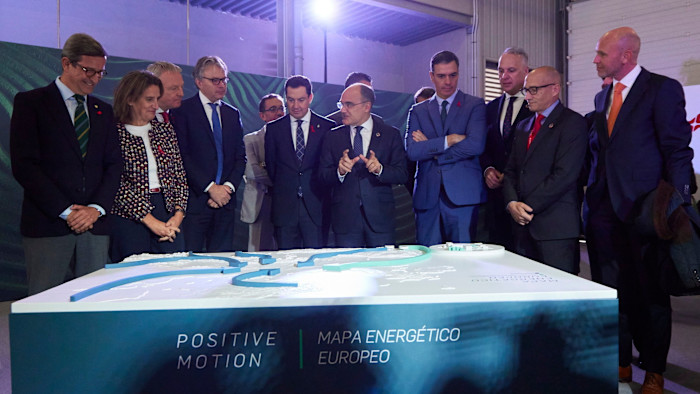
One of Europe’s most ambitious green hydrogen initiatives has received the go-ahead for final investment, bringing some positive news to a sector that has faced several setbacks recently.
Moeve, a $12 billion energy company backed by the UAE’s Mubadala and the U.S. private equity firm Carlyle, is set to announce that its board has approved the first phase of what aims to be Europe’s largest renewable hydrogen facility.
This initial phase of the Andalusian Green Hydrogen Valley project in southern Spain will see an investment of over €1 billion, which includes more than €300 million in EU grants. The plan involves building a 300MW electrolyser alongside new solar and wind energy sources.
Moeve, formerly known as Cepsa, recently secured a connection to the Spanish power grid, a crucial step for new industrial projects, and expects to start production by 2029.
Green hydrogen is generated by using renewable electricity to split water into hydrogen and oxygen. Moeve believes that Andalusia’s sunny and windy conditions give it a competitive edge for producing this fuel.
Back in 2022, the EU projected that renewable hydrogen could supply 10% of its energy needs by 2050, covering heavy industries, transportation, and heating. However, high production costs and insufficient infrastructure have led to delays and cancellations of over 50 projects in the last two years.
Moeve’s CEO, Maarten Wetselaar, acknowledged the industry slowdown but affirmed that the long-term potential of this technology remains. “The trend we’re on is the energy transition. Climate science hasn’t changed,” he noted, assigning worth to the need to tackle climate change.
The Andalusian project aims to expand into 2GW of electrolysis capacity, surpassing Sweden’s Stegra project, which is developing a green hydrogen-powered steel plant.
Wetselaar described the current challenges as a “natural cycle,” reflecting a broader understanding of the economic realities affecting hydrogen projects. Werner Ponikwar, CEO of Thyssenkrupp Nucera, also mentioned that the market is consolidating, stating that many projects are now either moving forward or being canceled.
Wetselaar outlined that Moeve’s hydrogen could be produced for “well south of €6 per kilogram,” which is about double the cost of conventional hydrogen from gas. Initially, the hydrogen will be used in Moeve’s refinery, but he envisions selling green hydrogen certificates to companies looking to lower their carbon footprints.
He added that the project faced around a year of delays due to permitting issues, but Spanish regulators are now speeding up the approval process. Water for the electrolyser will come from Moeve’s existing facilities in the area.
It’s worth noting that Moeve’s plans do not hinge on a proposed undersea pipeline for transporting hydrogen from Barcelona to Marseille.
Under the leadership of Prime Minister Pedro Sánchez, Spain’s Socialist-led government has been supportive of green hydrogen projects, pushing for a surge in renewable energy and a commitment to decarbonization.