

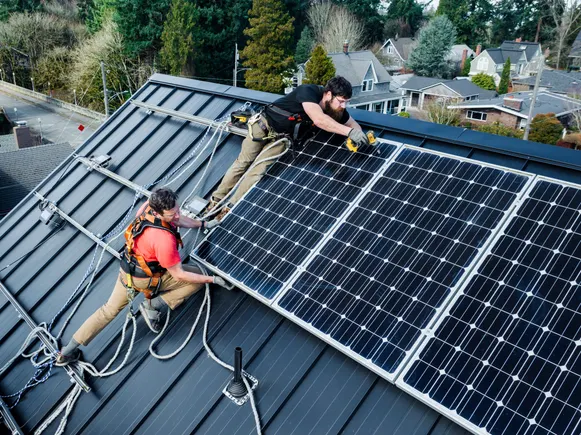
Sunrun, the leading provider of residential solar and battery subscriptions in the United States, reported a decline in both subscriber additions and installation volumes for the fourth quarter of 2025 compared to the previous year.
In their latest earnings report, Sunrun revealed that their key metrics for “subscriber value” also saw a downturn. The gross subscriber value fell by 2%, reaching $50,165, while net subscriber value dropped significantly by 30% to $9,098. Additionally, the cost to acquire each subscriber increased by 8% year-over-year.
Despite these challenges, Danny Abajian, Sunrun’s Chief Financial Officer, highlighted some positive signs that could help the company move forward into 2026. He pointed out that cash generation for 2025 exceeded estimates, and margins for new subscriber value improved.
“We are on track for another strong year in 2026,” Abajian stated confidently.
However, investors reacted skeptically, leading to a more than 35% drop in Sunrun’s stock during trading, diminishing about half of the company’s gains since the passage of the One Big Beautiful Bill Act last summer.
Key Statistics
- 71%: Storage attachment rate in Q4 2025, up from 62% a year earlier.
- 25,475: New subscribers in Q4 2025, a decrease of 17% from the previous year.
- 371 MWh and 216 MW: Installed storage and solar capacity in Q4 2025, down 5% and 11%, respectively.
- 42.4%: Average investment tax credit value in Q4 2025, an increase from 39.8% a year earlier.
Despite a generally negative outlook for the renewable energy sector due to recent regulations, Sunrun has benefited from extended favorable tax treatment for third-party owned solar systems, which make up most of their business.
Although Sunrun previously forecasted positive growth and margin improvement for 2026, CEO Mary Powell didn’t provide specific guidance on order volumes, stressing the focus on quality over quantity as they strive to construct what they call “the nation’s largest distributed power plant.”
Currently, Sunrun operates 4 GWh of networked battery capacity and has over 106,000 customers in various utility programs, demonstrating a robust operational base. Nevertheless, the company anticipates a modest decline in overall volumes in 2026.
This outlook is partly influenced by Sunrun’s decision to rely less on affiliate partners, a change that may result in more than a 40% decline in these channels this year. Although this platform accounted for a significant portion of their business, Powell explained that the complexity of sales processes and compliance challenges drove the decision.
The company’s lower aggregate subscriber value forecast for 2026 is tied to reduced reliance on affiliates. Nevertheless, Sunrun plans to resume sales efforts as uncertainties regarding budgets and tariffs are resolved, believing this will lead to stronger growth later on.
Sunrun is also entering into a new joint venture with Hannon Armstrong Sustainable Infrastructure Capital, which might support financing for additional capacity across U.S. homes.
With a focus on diversifying their financing and enhancing efficiency, Sunrun aims to navigate the current challenges while striving for a brighter future.