

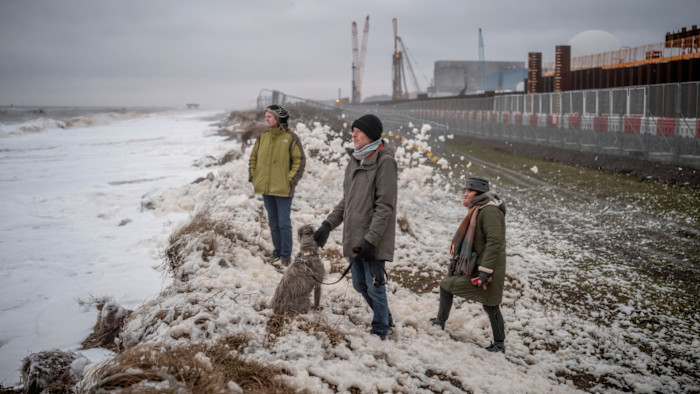
The eastern coastline of the UK is facing rapid erosion, with significant damage occurring in areas like Thorpeness, Suffolk. This alarming trend is not only threatening homes but also raises concerns for the nearby Sizewell C nuclear power plant under construction.
Norfolk and Suffolk’s coastline is recognized as one of the fastest-eroding areas in Europe, and recent months have seen an even quicker deterioration, particularly near the Sizewell C site. Since December 2024, more than 27 meters of cliff have been lost in Thorpeness, as reported by East Suffolk Council. This erosion surpasses the typical rate of 2 meters per year. Consequently, ten homes in this affluent area, including two apartments that sold for over £600,000, have been demolished since October.
Hilary Lightfoot, who owned a shop in Aldeburgh and lived in Thorpeness, recounted, “I made a cup of tea one morning, and in just half an hour, a quarter of my garden had disappeared.” Her home has since been torn down.
Helene Burningham, a physical geography professor at University College London, noted that the region has seen much more rapid erosion than initially anticipated. The Environment Agency estimates that over 2,500 homes in the area are at risk.
The Sizewell C plant, designed to supply around 7% of Britain’s electricity for at least 60 years, is situated on the coast where it requires water for cooling. This site is adjacent to Sizewell B and is one of the few nuclear sites approved by the government. Authorities insist that Sizewell C is located in a more stable part of the coast than Thorpeness.
Yet, concerns persist regarding coastal erosion, rising sea levels, and heightened storm intensity. The developer, EDF, has committed extensive resources to evaluate and mitigate these risks. Plans include constructing a 14-meter-high wall of boulders and a temporary 10-meter wall to protect the site during construction.
Experts like Sir David King, former UK chief scientific adviser, warn that erosion is a pressing challenge for the region, increasing vulnerability to rising seas. “We need to ensure a strong protection plan is in place for Sizewell C,” he emphasized, underscoring the importance of nuclear energy in the country’s energy mix.
Local residents have expressed doubts about the suitability of the site for such a power plant. With ongoing erosion, EDF is also developing a separate nuclear plant in less vulnerable Somerset.
Chris Wilson, a member of the community group opposing Sizewell C, questioned the logic behind building the plant in such a high-risk area. He reported that storms had breached dunes nearby, exacerbating concerns.
Critics like Paul Dorfman from the University of Sussex highlighted modeling predictions that suggest Sizewell C could face significant flooding in the near future. In contrast, Sizewell C’s representatives argue that their forecasts do not indicate such dire consequences.
The local community remains on edge as further demolitions seem imminent. Sophie Marple, who purchased a seafront property in Thorpeness years ago, remarked that no one anticipated the erosion’s rapid pace. With her family’s home now set to be demolished, she expressed disbelief at the sudden turn of events.
As Roo Clark, another local resident, noted, “Everyone is taken aback by how quickly the erosion is happening.” Lightfoot added that the village is deeply concerned, especially for recently purchased homes. Many residents now find themselves uneasy about the sea and its implications for their properties.