

Observing Energy Trends: US-Iran Tensions Impact Oil Prices
Greetings! Today’s focus is on oil market dynamics amid rising tensions between the US and Iran. Recently, the price of Brent crude reached $72.50, the highest in over six months, before settling at $70.69 by Tuesday morning.
The recent meeting of energy ministers in Paris showcased differing views on energy policies. The US promotes increased fossil fuel drilling, while many European nations are shifting their focus toward renewable energy.
U.S. Energy Secretary Chris Wright expressed concerns that European countries have strayed from effective energy policies, leading to a lack of consensus during the meeting. The US has hinted at the possibility of withdrawing from the International Energy Agency (IEA) due to its analyses regarding net-zero emissions, while also wary of increasing Chinese influence.
Exploring Space-Based Solar Power Solutions
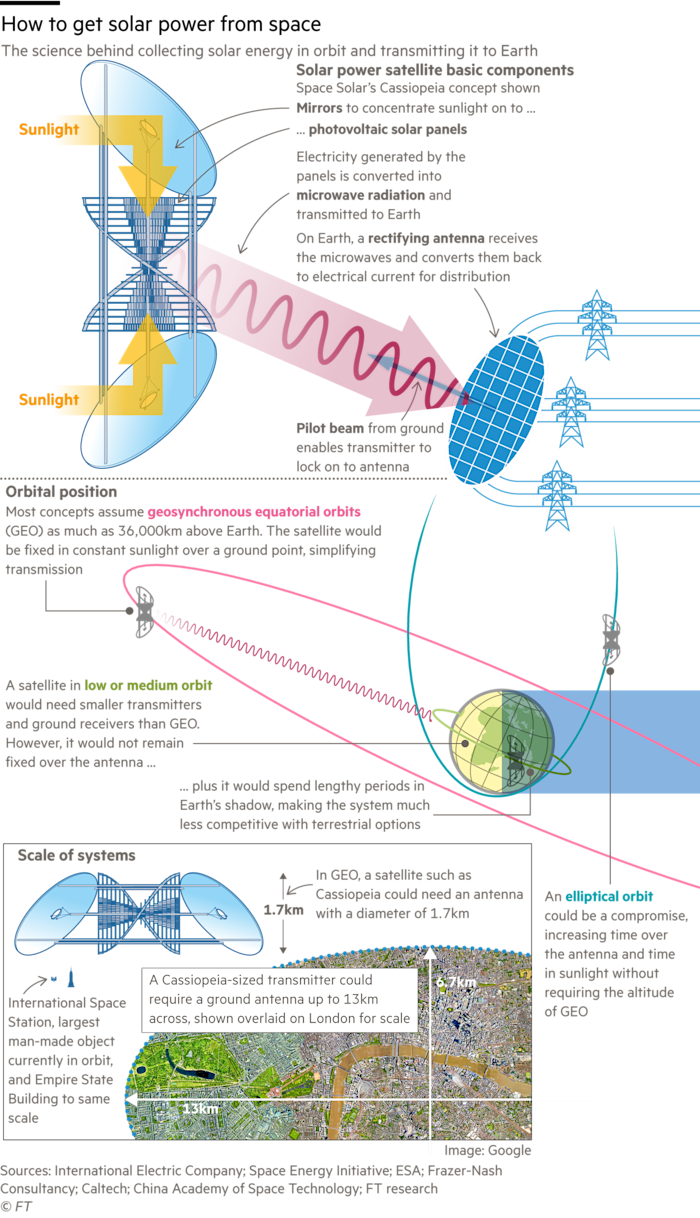
As the world seeks effective renewable energy sources, one innovative idea is space-based solar power (SBSP). This emerging technology aims to launch solar panels into space to harness continuous sunlight and transmit energy back to Earth in the form of microwave radiation.
Currently, solar technology contributes about 7% of global electricity, and this figure is expected to rise. However, there’s ongoing debate over whether to invest in SBSP or to further develop ground-based solutions like wind and battery storage.
Recent advancements in satellite manufacturing and launch costs have accelerated interest in SBSP. A report by Frazer-Nash Consultancy, in collaboration with Space Solar and Imperial College London, suggests that smaller SBSP systems could be more viable, potentially becoming economically competitive by 2040.
The UK government commissioned this report as part of its commitment to achieve net-zero emissions by 2050. Notably, the report indicates that small-scale SBSP could have a levelized cost of electricity between £87 and £129 per megawatt-hour, making it competitive with other low-carbon options like nuclear power.
The study also highlighted that small SBSP systems would need significant investment and support to succeed, and the first systems might have high initial costs—around £595 per MWh.
Challenges and Opportunities Ahead
The transition to SBSP faces various hurdles, including public acceptance of large antennas required for converting energy back on Earth. The report underscores the potential for revenue generation if energy transmission antennas are installed globally.
Moreover, the success of this technology relies on advancements in launch capabilities, such as SpaceX’s Starship, planned for commercialization by 2030. Yet, risks associated with satellite safety and competition with terrestrial renewable solutions remain concerns.
In conclusion, the journey towards innovative and reliable renewable energy continues, with exciting possibilities on the horizon.
Power Points:
- A notable supplier of enriched uranium warns of a possible supply shortage for US nuclear plants.
- An email mishap revealed a smuggling operation involving over $90 billion worth of Russian oil.
- A Chinese green energy leader cautioned that the growing AI sector could push many into “energy poverty.”
As we navigate these complex energy challenges and opportunities, it’s essential to remain informed and engaged in the unfolding developments in the energy sector.