

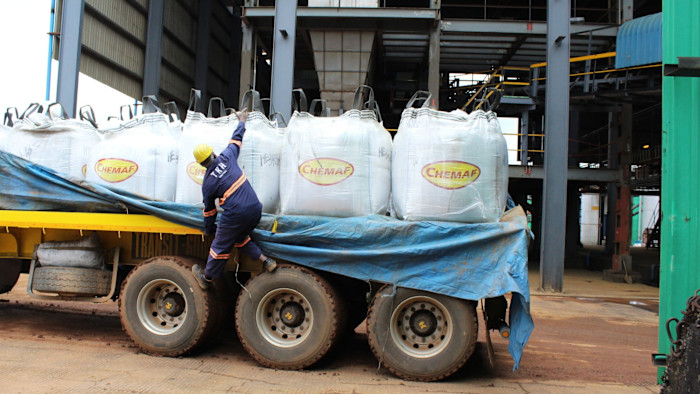
The Democratic Republic of Congo is getting close to deciding on the sale of Chemaf, a mining company that is becoming a key example of its new minerals partnership with the United States. Chemaf, which manages the Mutoshi copper and cobalt project, has attracted the interest of at least six potential buyers since being put up for sale in 2023.
This sale is important as it will test the new partnership between the U.S. and DR Congo, established in December alongside a peace agreement between DR Congo and Rwanda. The goal of this arrangement is to reduce U.S. reliance on China for crucial minerals.
The lengthy sale process for Chemaf may soon conclude, possibly as early as Tuesday, during a critical minerals meeting in Washington, according to sources familiar with the situation. “We expect to make a decision shortly,” stated Louis Watum Kabamba, the DR Congo’s minister of mines, emphasizing the urgency of finalizing the deal.
The U.S. has actively been advocating for a consortium led by Virtus Resources to win the bid. This group includes veterans of U.S. intelligence and security services, along with American hedge fund Orion, which has received government backing for its critical minerals efforts, and the Indian company Lloyds Metals.
Chemaf has been on the market since 2023. A previous sale to China’s Norinco fell through after local opposition from state-owned miner Gecamines and U.S. objections.
Other bidders include Congolese firm Buenassa and Global Critical Resources, which was established by Austrian entrepreneur Cevdet Caner. Both are relatively new to the mining sector. Additionally, there are at least three more groups that have submitted bids but are not advanced in discussions.
Negotiating the sale has been challenging because multiple parties have a say in the deal: the Virji family, who own Chemaf; the DR Congo government, which holds a 5% stake; and Trafigura, a key creditor that arranged a $600 million loan for the project in 2022.
Washington is strongly backing the Virtus bid, viewing it as a significant move to solidify the minerals agreement made in December. A State Department official stated that having a major U.S. investment in the region would demonstrate genuine private sector interest and support future investments.
Reports indicate that Virtus is currently the frontrunner, but the deal is not yet finalized and could still change. Chemaf produces less than 20,000 tonnes of copper annually, a small portion of the global output. However, it has the potential to become a leading cobalt producer once a planned $300 million expansion of its Mutoshi project is complete, which any new owner will need to fund.
Chris Vandome, who heads the Critical Minerals Initiative at Chatham House in London, emphasized that the U.S. interest in Chemaf reflects its broader strategy in the DRC and its approach to Africa during the Trump administration. He noted that China’s dominance in mineral supply chains played a critical role in the U.S.’s intervention to prevent the Congolese government from selling Chemaf to a Chinese firm.
While Kabama did not confirm if a preferred bidder has emerged, he mentioned that the deal’s significance extends beyond just business, with implications for local communities. He also addressed concerns raised at January’s Future Minerals Forum about whether DR Congo is giving away its resources, asserting that the partnership aims to be mutually beneficial.
Kabama confirmed that his government has sent a list of strategic mining projects to Washington to attract further investments.
All parties involved in the sale, including Orion, Virtus, Trafigura, Buenassa, and the Virji family, opted not to comment on the matter.