

Canada’s oil sector is experiencing a significant upswing, especially as it shifts its focus towards Asian markets to lessen its dependency on the United States. This move comes in light of fears that an influx of Venezuelan oil into the global market might dampen demand for Canadian crude.
Despite challenges posed by lower global oil prices, Canadian oil companies are achieving record production levels and returning profits to shareholders. Experts point to Canada’s vast reserves as a solid foundation, allowing it to thrive even as the world progresses toward greener energy solutions.
With ongoing trade tensions with the US heightened by President Trump’s recent tariff threats, Canada is ramping up its initiatives to diversify its export avenues. This month, Prime Minister Mark Carney visited Beijing to discuss a strategic partnership with China and is planning a trip to India soon.
According to Canada’s energy regulator, oil production soared to 5.19 million barrels per day in early 2025, surpassing 2024’s figure of 5.13 million barrels. The sales to China saw a remarkable rise, increasing to 88.7 million barrels last year, while US exports to China dropped significantly.
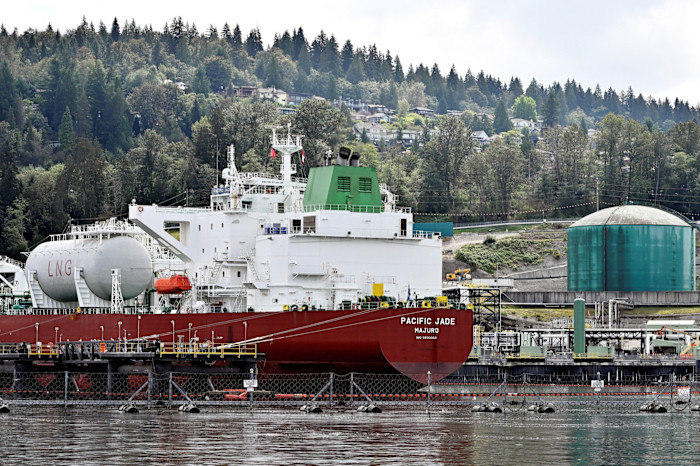
The opening of the Trans Mountain Extension pipeline in May 2024 was pivotal, allowing Canadian crude to be transported directly from Alberta to the west coast for Asian exports. David Chelich, the global head of energy at the Toronto Stock Exchange, noted that this is a great time for Canadian oil as exports to countries like China, South Korea, and India gain momentum.
Geopolitical events have further solidified Alberta’s status as a reliable energy supplier and bolstered calls for additional pipelines to the west coast for even greater access to Asian markets.
Canadian oil shares are nearing record highs, with major companies like Suncor and Cenovus announcing a combined capital investment of $19.5 billion aimed at expanding production this year.
Despite the competitive nature of the oil market, especially with Venezuela’s heavy crude being similar to Canada’s, analysts suggest that Canadian oil producers remain in a strong position. Since the recent political shifts in Venezuela, Canadian firms saw a momentary dip in stock prices, but recovery is expected as any increase in Venezuelan oil supply is anticipated to be gradual.
Efforts are underway to build new pipelines to improve Canada’s export capacity, especially given its logistical advantages for shipping oil to Asia. Alberta’s government has committed to submitting a proposal for a new pipeline soon, aiming for swift approval processes.
Lisa Baiton, president of the Canadian Association of Petroleum Producers, emphasized Canada’s unique advantages for tapping into Asian markets, citing shorter shipping distances and competitive prices.
Given the current climate of uncertainty in energy markets, Canada stands out as a dependable choice for oil buyers. Experts continue to note the long-term reliability of Canadian oil production, setting it apart from other suppliers like Venezuela.