

Breaking News:
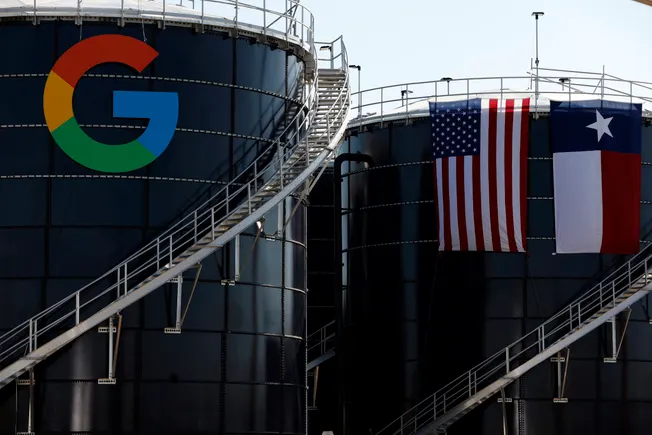
- Alphabet, the parent company of Google, revealed plans to acquire Intersect, a clean energy and data center developer, for $4.75 billion. The deal is expected to finalize in the first half of this year.
- Intersect will continue to operate independently, maintaining its leadership under founder and CEO Sheldon Kimber. Current investors will also buy some of Intersect’s assets and manage them separately.
- Google previously held a minority stake in Intersect, having collaborated on developing energy parks and data centers, along with $20 billion in renewable energy and storage solutions.
Insightful Takeaways:
This acquisition comes as Google faces challenges regarding rising emissions, partly due to increased AI activity. According to their recent sustainability report, Google is focusing on decarbonizing its energy usage, primarily at data centers and offices. The tech giant aims for net-zero emissions across its supply chain by 2030 but reported a 51% increase in emissions in 2024 compared to 2019.
Alphabet will take over projects currently under development and construction from the Google-Intersect partnership. Founded in 2016, Intersect has a portfolio worth $15 billion, with plans for 10.8 gigawatts of clean energy capacity by late 2028.
The projects include initiatives in Texas and California, featuring a significant solar and wind project in development. After the acquisition, Intersect will keep collaborating with Google on various efforts.
CEO Sundar Pichai emphasized that this partnership will enhance capacity and promote innovation in energy solutions. Intersect’s CEO, Kimber, noted that the partnership’s growth is a natural progression and called for needed improvements in the U.S. power industry to support advancing AI technology.
The new investor-led company will take control of Intersect’s operating assets in Texas and California, including a combined solar and battery storage project under development. This marks a shift in Alphabet’s strategy, moving away from joint partnerships to direct acquisitions in the decarbonization field.
By 2025, Google has set ambitious targets to cut its carbon emissions and achieve consistently carbon-free energy for its global operations, amidst ongoing challenges with emissions growth.