

Oil traders are currently navigating a tricky situation marked by supply concerns from Venezuela, paired with warnings of a global oil surplus. Recently, a significant event occurred when U.S. forces seized the Skipper, a vessel transporting Venezuelan oil, leading to a halt in oil tanker movements to and from the country’s ports.
Following this seizure, at least four supertankers and another carrying Russian naphtha had to change course. Analysts suggest that a notable presence of U.S. naval vessels in the Caribbean may lead to further seizures as the U.S. exerts pressure on President Nicolás Maduro’s regime.
Only ships chartered by Chevron, which has permission to operate in Venezuela, have continued to move oil, exporting around 150,000 barrels per day to the U.S. Gulf Coast. Naphtha is crucial for processing the heavy crude oil produced by Venezuela. Without it, the oil production may suffer significantly.
If Venezuela’s oil exports, which were over 900,000 barrels per day last November, were effectively embargoed, the country would face a severe economic blow, as it heavily depends on oil export revenue, despite typically selling at a lower price to China due to U.S. sanctions.
Traders believe that even with potential reductions in Venezuelan oil supply, global oil prices may not see major spikes due to expectations of a “super glut” next year fueled by increasing supply and economic weakness.
Most Venezuelan oil exports go to China, which has been accumulating crude. This country also has other discounted oil sources, including Iran and Russia, both under U.S. sanctions.
Moreover, developments in the Russia-Ukraine peace negotiations are being closely monitored for hints of increase in Russian oil exports, adding to the pressure on the Brent crude price, which settled at $60.56, nearly a 1% drop.
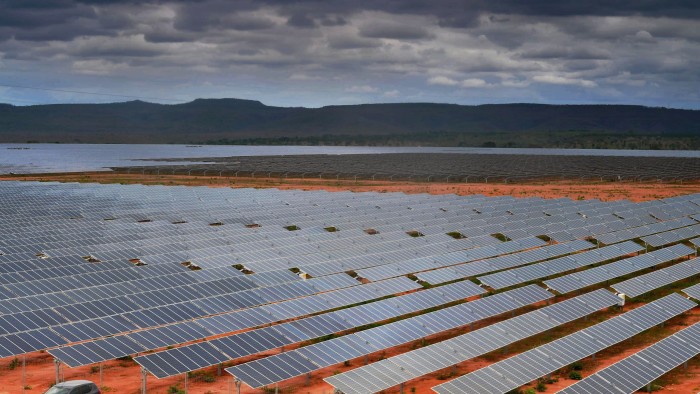
In Brazil, the rapid expansion of renewable energy sources like wind and solar has hit some roadblocks, specifically with the electricity grid struggling to keep up. This growth has been impressive, with renewable energy’s contribution rising from 4% to 40% of total generation capacity in just eight years, resulting in around $78 billion invested in renewables.
However, the inability to manage the balance between supply and demand has led to increased instances of renewable energy plants being temporarily halted, raising alarms about the future of new projects.
Traditional large-scale hydroelectric power has been Brazil’s backbone; however, the growing reliance on intermittent solar and wind energy presents challenges. Current data shows that between January and October this year, wind and solar power generation faced a 20.4% reduction due to these curtailments, causing significant financial losses estimated at R$6 billion (around $1.1 billion).
Experts believe that these curtailments are causing uncertainty within the investment community, possibly driving some businesses to exit the market. Inefficiencies in infrastructure, particularly in the transmission systems across Brazil, are highlighted as key factors behind these issues.
Efforts are underway in Brasília to address these challenges with new legislation aimed at providing compensation for generators facing curtailments and improving the overall electrical system. Significant investments in infrastructure, estimated at R$40 billion ($7.4 billion) by 2039, will be necessary to address the ongoing challenges.
As Brazil strives to showcase its green energy achievements on a global stage, overcoming these curtailment issues remains vital for fully harnessing its renewable potential.