

Hello from New York! While I’m still enjoying my Thanksgiving leftovers, there’s some concerning news in the bond markets. Traders are raising red flags about the independence of central banks. They fear that Kevin Hassett, a possible candidate for Federal Reserve chair, might slash interest rates to appease President Donald Trump. Hassett has recently come to the forefront as a likely replacement for Jay Powell, with whom Trump has had disagreements.
In Europe, a significant change is underway as the EU gears up to impose a ban on Russian gas imports starting in the autumn of 2027, lasting for four years. European Commission President Ursula von der Leyen mentioned that today marked a “good day,” although Hungary plans to challenge this decision in court.
Today’s focus will be on the energy sector and why some power traders are skeptical about the projected demand coming from artificial intelligence (AI).
Why Are Energy Traders Doubtful About Data Center Expansion?
There seems to be a puzzling situation unfolding in the forward energy markets. The typical story is that the increasing use of AI, along with electrification in transportation and heating, is expected to create a surge in power demand across the U.S. If this demand isn’t met, it could slow down data center expansion and lead to higher utility bills.
Data from Grid Strategies, an energy consulting firm, suggests that electricity consumption has been pretty steady for decades, but it’s projected to rise by about 5.7% each year until 2030. Peak demand is anticipated to increase by 3.7% annually.
Unfortunately, the infrastructure for power generation and transmission is limited and difficult to expand. According to BloombergNEF, it generally takes around seven years to connect new developments to the grid.
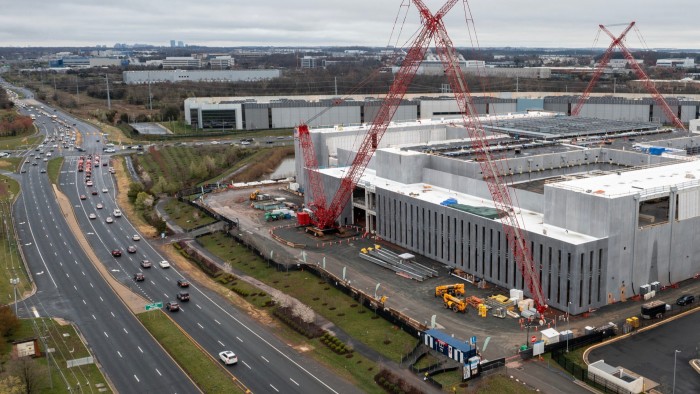
Tech companies are raising alarms about potential energy shortages, which could impact elections as voters react to increasing electricity costs. If you look out your window, you may even spot a new data center under construction. However, some industry experts believe that the expected electricity demands might be overstated.
This critical insight is reflected in current forward energy market trends.
Understanding Forward Energy Markets
To clarify, forward markets are where traders buy and sell commodities—everything from oil to orange juice—for future delivery. They help mitigate price risks, allowing buyers and sellers to protect themselves against fluctuating prices, which is vital for long-term investments and future supply stability.
In energy markets specifically, where infrastructure development is essential, pricing certainty is crucial to financing power plants and pipelines needed for the projected AI growth.
Key market players include utilities, data centers, and large industry entities on the buying side, while sellers typically include energy producers and trading firms like NextEra, Shell, and Goldman Sachs.
If there’s a significant rise in electricity demand without sufficient supply, we would generally expect futures prices to increase sharply. However, this isn’t what’s occurring right now.
Travis Kavulla, from NRG Energy, has pointed out an intriguing trend: in the PJM market, which includes Virginia’s tech-heavy area, future prices for 2030 are only slightly higher than for 2026. Texas’s Ercot market is exhibiting a “backwardated” structure, meaning prices for distant years are lower than those for the near term, despite forecasts predicting a dramatic rise in electricity needs.
While there has been a slight increase in recent months, industry watchers note that forward pricing isn’t aligning with expected demand. This discrepancy may suggest that traders believe the anticipated electricity needs for data centers are indeed exaggerated due to construction hurdles and supply chain troubles.
Gabe Phillips, a former energy trader, emphasizes the numerous challenges faced in building anything, whether it’s a mall or a data center. He notes various obstacles, including permits, zoning laws, and local regulations.
There’s a belief among traders that politicians might intervene to keep electricity prices stable, much like some governors in the PJM region have done. Data centers are also becoming more efficient, which could mean less energy consumption per computation, though the escalating demand for AI operations might counterbalance those gains.
In summary, while efficiency is improving, the overall demand for computation is skyrocketing. This complex situation is leading some market participants to question which factor will prevail—efficiency gains or rising demand.
Developers of data centers are often encouraged to “generate their own power,” using alternative sources like fuel cells. This may not reflect in broader market data.
As Phillips put it succinctly, “Many data centers will essentially operate as their own entities without connecting to the main power grid.”
Power Points:
- Glencore has reduced its workforce by 1,000 jobs as part of a cost-cutting initiative.
- For the first time next year, India’s oil consumption is expected to increase faster than China’s, as projected by Trafigura.
- A fusion energy venture backed by Google and Chevron is collaborating with the UK’s atomic laboratory to make strides in energy innovation.