

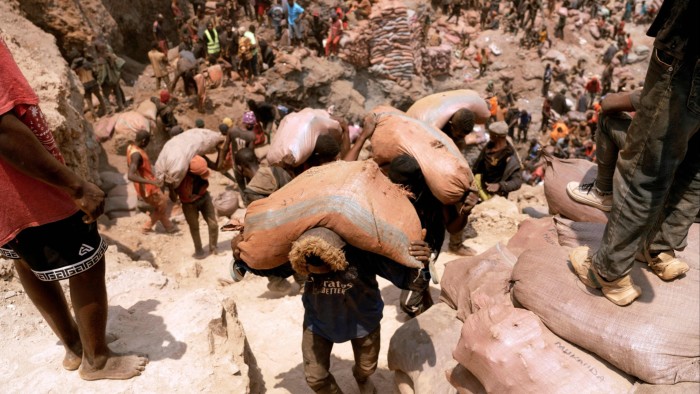
The Democratic Republic of Congo (DR Congo) has decided to prioritize US buyers for minerals from its state-owned mining companies. This announcement comes just a day after Washington helped broker a tentative peace treaty between DR Congo and its neighbor, Rwanda.
On Friday, the US government and Swiss trading company Mercuria unveiled plans to invest up to $1 billion in mineral projects in DR Congo, known for being the largest producer of cobalt globally and the second-largest producer of copper.
Following the recent treaty, a significant agreement on critical minerals, economics, and security was signed between Washington and Kinshasa. This deal opens doors for greater US access to the vast mineral resources of the DR Congo.
President Felix Tshisekedi of DR Congo has been seeking support from the US to address the ongoing conflicts, particularly in the eastern region of the country, in exchange for facilitating access to its mineral wealth, which includes gold, tin, and copper.
Additionally, the US International Development Finance Corporation (DFC) plans to provide up to $1 billion for the Lobito Railway project. This railway will connect mineral-rich areas to customers in the West via an Atlantic port.
The DFC will also assist in a new marketing partnership between Gécamines, the state-owned mining company, and Mercuria. This collaboration will enable American companies to have the first opportunity to purchase copper and cobalt from Gécamines.
During the signing event, President Donald Trump commented, “We’ll be sending some of our biggest and greatest companies to these countries. Everyone is going to make a lot of money.”
Ben Black, the CEO of DFC, expressed that these initiatives would enhance vital supply chains and open new opportunities in the private sector, improving America’s competitiveness on a global scale.
Mercuria plans to contribute $1 billion towards this partnership, providing logistical support such as storage and transportation for the minerals.
Guy Robert Lukama, chair of Gécamines, emphasized that the collaboration allows the company to effectively direct its resources toward markets that support sustainable growth.
Gécamines holds minority interests in mines, including a significant 20% share in the major Tenke Fungurume copper-cobalt mine, controlled by China’s CMOC. According to analysts, Gécamines’ holdings contribute about 2% of global copper production.
Mercuria’s head of metals noted that this agreement enables DR Congo to have more control over its mineral sales.
“There is a broader trend where countries rich in minerals seek to manage their resources more effectively, especially in areas where they have stakes,” he said.
Chinese companies currently dominate copper and cobalt production in the DR Congo.
The new US-DR Congo minerals agreement promises collaboration in creating a strategic mineral reserve, which aims to ensure a stable supply of critical minerals for the United States. It also supports infrastructure initiatives, including the Grand Inga Dam and the Lobito project, while giving other state-run enterprises in DR Congo a chance to sell minerals to US buyers first.
Experts suggest that several mining projects in the region could see benefits from these new US partnerships.
Rob Strayer from the Critical Minerals Forum stated, “This peace agreement is a major advancement and will facilitate the unlocking of these mineral resources,” but also cautioned that the effectiveness of these partnerships relies heavily on private sector involvement.
However, this influx of funding and agreements comes amid concerns about the peace deal’s stability, which coincided with renewed fighting that has displaced many Congolese citizens into Rwanda. The Congolese army and Rwanda-allied M23 rebels have accused each other of breaching a previous ceasefire that was never fully implemented.