

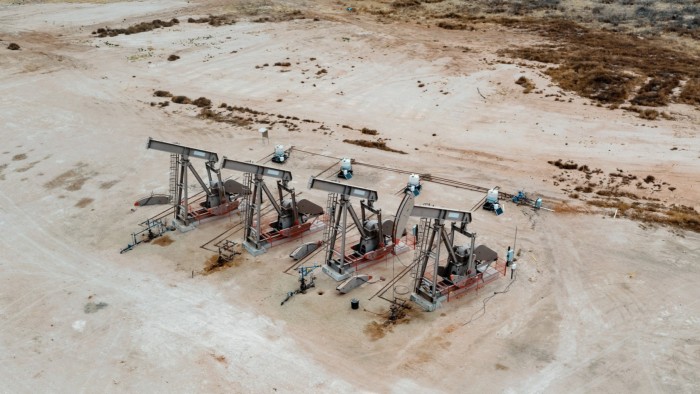
Methane emissions from the largest oilfield in the US have decreased significantly as producers step up efforts to detect and seal leaks. This comes in response to President Joe Biden’s strong measures aimed at reducing this harmful greenhouse gas.
A recent study reveals that emissions in the vast Permian Basin, which spans Texas and New Mexico and accounts for nearly half of the country’s oil production, fell by 26% last year. Specifically, producers released around 96 billion cubic feet of methane into the atmosphere in 2023, a drop from 131 billion cubic feet in 2022.
Raoul LeBlanc, S&P Global’s vice president of upstream research, stated, “Companies are taking action and it’s working.” He noted that societal demands for cleaner energy and new regulations are pushing producers to take action, and they are now better equipped with the necessary tools and data.
The significant reduction in emissions from the Permian Basin suggests that President Biden’s efforts are showing positive results. Methane is a much more potent greenhouse gas than carbon dioxide in the short term, but its emissions are often simpler to address due to their origins, typically stemming from leaks or the venting of excess gas.
As methane is the main component of natural gas, producers have a financial motivation to capture it for sale rather than allowing it to escape into the atmosphere. When burned, methane converts to carbon dioxide, which, while also harmful, contributes to warming at a slower rate than methane itself.
Biden has emphasized the importance of reducing methane emissions, stating it is crucial for managing global warming in this critical decade. On his first day in office, he directed the government to develop new regulations regarding leaks and later committed the US to an international agreement aimed at cutting methane emissions by 30% by 2030.
Recently finalized rules by the Environmental Protection Agency require producers to find and fix leakages in existing equipment while imposing stricter regulations on new operations. Additionally, a “methane fee” has been introduced, penalizing those who exceed specific emission thresholds.
However, measuring methane emissions accurately has been challenging. A study by the Environmental Defense Fund highlighted that the industry is likely releasing four times more methane than the Environmental Protection Agency previously estimated.
Encouragingly, the reported reduction in emissions in 2023 is equivalent to approximately 18.5 million tons of carbon dioxide, which matches the total annual emissions of an entire country like Croatia.
Looking ahead, there are concerns that the incoming administration under Donald Trump may seek to roll back some of the existing regulatory frameworks, based on Trump’s promises to undo much of Biden’s environmental policies. Environmental advocacy groups worry that Biden’s methane fee, already facing criticism from parts of the oil industry and certain lawmakers, may also be at risk.
Despite these potential challenges, analysts like Kevin Birn from S&P believe oil producers may still push forward with positive changes. He pointed out that the motivations are not solely based on US regulations; there are also international pressures and commitments to shareholders that the industry must consider.
“It’s likely that the industry will maintain its progress,” Birn added, highlighting the ongoing trends towards sustainability.