

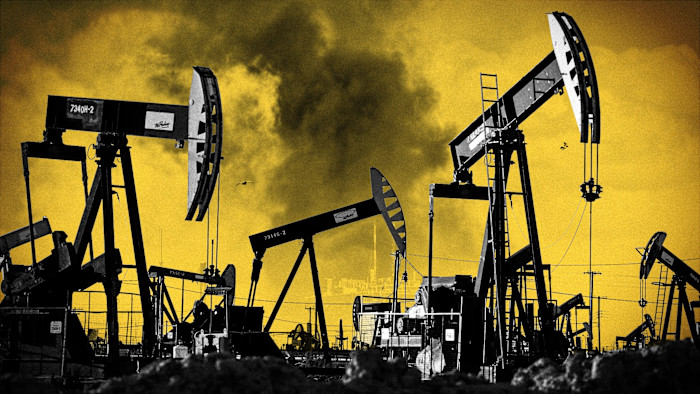
US oil companies could gain more than $60 billion this year if crude oil prices remain high, thanks to the current situation regarding Iran. According to investment bank Jefferies, US producers are expected to see an increase of about $5 billion in cash flow this month, with oil prices rising nearly 47% since the crisis began on February 28.
If US oil prices average around $100 a barrel for the year, companies stand to gain around $63.4 billion from production, claims energy research firm Rystad. Recently, Brent crude prices passed the $100 mark, leading President Donald Trump to announce that the US is the world’s largest oil producer and profits will follow from increased oil prices.
Currently, West Texas Intermediate, the US benchmark, was priced at $98.71 a barrel as of Friday. This financial boost primarily helps US shale companies, which have few operations in the Middle East, but the situation is more complicated for the largest international oil companies.
Major players like ExxonMobil and Chevron, along with European counterparts BP, Shell, and TotalEnergies, are heavily invested in the Gulf region and have been affected by issues like the closure of the Strait of Hormuz. This disruption has already led Shell to declare force majeure on some liquefied natural gas shipments from Qatar.
The oil industry’s challenges were highlighted when SLB, the world’s largest oil services company, warned about lower profits. Martin Houston, a seasoned industry expert, stated that there are no winners in this crisis, especially for international oil firms, which would prefer stability rather than fluctuations that raise prices temporarily.
Iran’s leadership indicated they would maintain the closure of the strait, which is critical for global oil and gas transportation. Research from Goldman Sachs revealed that about 18 million barrels of oil that typically flow through the strait each day remain obstructed, significantly impacting the LNG market as well.
Analysts at RBC Capital Markets projected that the conflict could continue into spring, with Brent crude prices potentially reaching over $128 a barrel shortly. Rystad’s Thomas Liles noted that while the strait closure could pose serious challenges for Middle Eastern oil companies, Western oil majors might also feel significant impacts due to their investments in the region.
The world’s top oil firms have expanded their presence in the Middle East recently, engaging in various deals to enhance their oil reserves. Total recently stated that higher oil prices would compensate for any losses incurred from Middle Eastern production.
Despite the difficulties, Exxon’s CEO Darren Woods mentioned that their size provides some resilience during this crisis, allowing them to optimize operations amid the turmoil. Nevertheless, Exxon’s shares have not performed as well as those of BP and Shell since the crisis started.
Other companies, like Norway’s Equinor, have seen their shares rise due to having no stakes in the Middle East and being a major natural gas supplier to Europe, which has faced price increases following disruptions in LNG supplies.
The current crisis may prompt a shift towards domestic energy resources to mitigate risks linked to supply interruptions and price spikes. As market analysts suggest, countries heavily dependent on Middle Eastern oil may need to reassess their approaches, even considering alternatives like nuclear energy as a more stable energy source.