
Essential News for Corporate Energy Risk Managers
Author: Graham Foster

Opec has decided to stop using the US Energy Information Administration (EIA) to monitor the oil production levels of its members. This change was announced on Monday and comes in conjunction with a shift in monitoring partnerships, as Opec will now utilize data from companies like Kpler, OilX, and ESAI instead of the EIA and Rystad, another energy consultancy. According to sources familiar with the situation, five other firms that track Opec’s output will remain in their roles. This group, consisting of eight monitoring companies, is essential for checking if Opec nations are adhering to their agreed production limits. A…
Equinor, the Norwegian energy firm that used to carry “oil” in its name, is changing direction again by focusing more on fossil fuels. This decision comes as the company looks to boost returns for its shareholders. Recently, Equinor announced that it plans to ramp up the production of fossil fuels and significantly cut its investments in renewable energy. Chief Executive Anders Opedal stated that the goal is to create long-lasting value for shareholders. Under these new plans, Equinor aims to produce 2.2 million barrels of oil equivalent per day by the year 2030, which is 10% more than what was…
China announced on Tuesday that it will introduce new tariffs on specific U.S. imports starting February 10. This decision is a direct response to the tariffs imposed by the Trump administration, according to China’s Ministry of Finance. Under the new measures, coal and liquefied natural gas will face a 15% tariff, while crude oil, certain agricultural machinery, and some cars will be hit with a 10% tariff. Additionally, China stated that it will impose export controls on various metals like tungsten and tellurium, as mentioned in a separate announcement. The announcement follows President Trump’s directive on Saturday to impose an…
Key Updates: The Solar Energy Industries Association (SEIA) has announced a bold plan for the United States to significantly expand its energy storage capabilities. The goal is to install 10 million distributed energy storage systems and achieve a total storage capacity of 700 gigawatt-hours (GWh) by the year 2030. To support this initiative, SEIA released a national energy storage policy guide that provides insights into current laws, deployment targets, incentives from states and utilities, demonstration programs, and protections for consumers engaging with energy storage. With increasing demands for power and a growing percentage of renewable energy, the SEIA emphasizes the…
Donald Trump’s recent actions concerning renewable energy could lead to an electricity crisis in the United States, as executives in the industry have raised alarms over potential rising costs for consumers and the need to compete globally, especially in artificial intelligence (AI). Within his first week as president, Trump imposed a halt on all offshore wind project approvals, reviewed existing wind leases, and put a stop to crucial incentives for green energy amounting to hundreds of billions of dollars. These decisions have caused considerable concern in a sector that is currently the most affordable and rapidly expanding component of the…
The UK government is seeking legal advice regarding its financial commitment related to TotalEnergies’ $20 billion liquefied natural gas (LNG) project. This initiative, which involves significant taxpayer funds amounting to $1.15 billion, is currently in limbo, largely due to ongoing violence in Mozambique’s Cabo Delgado province. UK Export Finance (UKEF), the agency responsible for overseeing these financial operations, had pledged assistance in June 2020. This support was aimed at facilitating the development of one of Africa’s largest energy projects. However, shortly after the agreement was made, the project was put on hold following a series of terrorist attacks in the…
Welcome to this edition of Energy Source from London. Recently, U.S. President Donald Trump announced a 30-day delay on tariffs aimed at Mexico and Canada, following these countries’ efforts to improve border security. Meanwhile, China has altered the dynamics of the coal, gas, and oil markets by introducing its own tariffs on these resources. What does this mean for the industry? U.S. refineries are facing a challenging month ahead as they adjust to a shaky supply chain, while traders might benefit from the resulting uncertainty. Interestingly, China, which relies heavily on imported oil and gas, has some new strategies. Although…
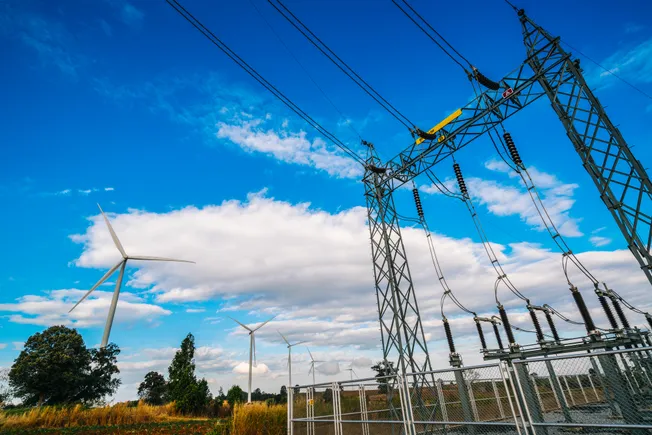 The Federal Energy Regulatory Commission (FERC) has recently approved a new proposal from the Midcontinent Independent System Operator (MISO) to limit its interconnection queue studies, despite concerns from clean energy advocates. This decision aims to help streamline the interconnection process, making it more efficient and transparent for customers wanting to connect to the transmission system. MISO’s new limit will be implemented during its upcoming interconnection study, which is set to begin this fall. This move follows a previous rejection by FERC of MISO’s initial proposal last year, due to concerns about exemptions that could arise and potential…
Scott Miller is the executive director of the Western Power Trading Forum. Scott Miller, who specializes in Western power issues, stays connected with peers addressing electricity market matters nationwide. Recently, many voices have expressed concerns about the Eastern markets, particularly the PJM Interconnection, especially regarding the capacity markets. Critiques suggest these markets are either excessively priced or overly controlled, and that PJM is struggling to effectively represent its stakeholders. Capacity markets and ensuring resource adequacy are complex challenges. Fortunately, in the West, there is a focus on meeting resource adequacy through direct agreements rather than centralized methods. While the debates…
Subsea cables play a crucial role in global communications and energy transfer. If you laid them end to end, they would circle the earth 37 times! However, with the growing demand for renewable energy, the need for these cables is increasing. This shift has filled the order books of cable manufacturers, boosting their stock prices. Despite their importance, subsea cables face numerous challenges. They are susceptible to various risks, including damage from sabotage and changes in the seabed. Additionally, the political landscape significantly impacts investor sentiment; for instance, Donald Trump’s presidency has raised concerns about future support for renewable energy.…