
Essential News for Corporate Energy Risk Managers
Author: Graham Foster

According to a recent report from Vitol, the world’s largest independent energy trader, global oil demand will not see a decline at least until 2040. This raises concerns about ongoing reliance on petroleum as economies continue to grow. Vitol estimates that by the end of this decade, global oil demand will peak at almost 110 million barrels per day (b/d), before easing to around 105 million b/d by 2040. They highlighted that demand in 2040 is projected to be similar to current levels. This forecast differs from other energy outlooks, such as the International Energy Agency (IEA), which anticipates a…
The chief executive of Resolute Mining, a gold mining company based in both Australia and the UK, has stepped down from his position. Terry Holohan’s resignation comes shortly after he faced a difficult period in Mali last year, where he and his team were briefly detained during discussions with the military government regarding their business operations in the country. Their detention occurred in Bamako, the capital of Mali, and followed disputes about payment and terms of production. To resolve these issues, Resolute agreed to pay around $160 million. Following this incident, Holohan took a leave of absence from the company…
For over 20 years, WGL and PowerPlan have maintained a strong partnership based on mutual trust and respect. The robustness of this collaboration became clear in 2022 when WGL faced several challenges but was able to rely on PowerPlan for support. WGL’s Tax Director, Charles Mannix, expressed confidence in their long-standing relationship, stating, “I knew we had a problem, and, as many times in the past, I knew we could rely upon PowerPlan to focus on our situation and find a solution.” PowerPlan offered a co-sourcing arrangement to assist WGL with immediate resource constraints. Both organizations collaborated to develop a…
Tesla’s battery storage deployment saw a massive increase in 2024, rising to 31.4 GWh, a sharp rise from 14.7 GWh in 2023. This information was revealed in the company’s earnings presentation. Looking ahead, Tesla anticipates that storage deployments will grow by at least 50% this year. During a recent analyst conference call, Tesla CEO Elon Musk expressed urgency in boosting the output of stationary battery storage. “We’re trying to ramp output of the stationary battery storage as quickly as possible,” he said. Furthermore, Tesla reported a significant boost in profitability for its energy generation and storage segment, with gross profit…
Drax, a major energy company from the UK, has reached out to Canadian officials in hopes of modifying EU regulations that could restrict the use of wood biomass, particularly materials sourced from British Columbia’s forests. In a letter that has come to light, Drax expressed concerns that the EU’s new definitions regarding biomass could inadvertently limit the supply of wood pellets by effectively banning sourcing from old-growth and primary forests. The letter, dated last year and now revealed through a freedom of information request, highlights that Drax believes the EU’s approach does not align with local laws and practices regarding…
In a bold move, President Donald Trump initiated a series of actions in his first week that effectively reversed more than 70 initiatives related to climate change and green energy established by his predecessor, Joe Biden. Trump’s sweeping executive orders aimed to roll back significant federal efforts designed to tackle climate change, which included limiting oil and gas development and promoting clean energy. Key among these changes was the lifting of a ban on new offshore drilling and the withdrawal of the United States from the Paris climate agreement, alongside other commitments set under international climate frameworks. Additionally, Trump dismantled…
Dive Brief: Stronghold Digital Mining and its subsidiary will pay approximately $1.4 million due to violations of PJM Interconnection market rules, as detailed in a settlement agreement approved recently by the Federal Energy Regulatory Commission (FERC). Stronghold and Scrubgrass Reclamation, which operates an 85-MW coal-fired power plant in Pennsylvania, will return $678,635 in capacity revenues to PJM and pay a penalty of $741,365 to the U.S. Treasury. This enforcement action occurs as Stronghold and Bitfarms, which is in the process of acquiring Stronghold, explore the potential to expand their Bitcoin mining operations in Pennsylvania by as much as 955 MW.…
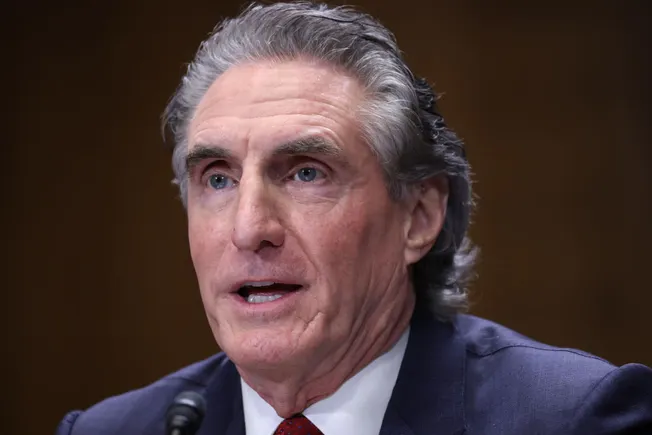 The Senate has confirmed Doug Burgum, the former governor of North Dakota, as the Secretary of the Interior in a decisive 79-18 vote. This means he will now serve in President Donald Trump’s cabinet. Burgum joins an administration focused on increasing oil and gas production while limiting wind energy generation on federal lands. However, during his time as governor, Burgum supported various energy sources and mentioned at his confirmation hearing that he believes in an “all of the above” energy strategy. He expressed the need for more overall energy production, particularly emphasizing the importance of baseload generation. President Trump…
Russia’s leading liquefied natural gas (LNG) producer, Novatek, is actively trying to influence European Union policymaking. The company has reached out to think-tanks in Brussels, including the European Policy Centre, Bruegel, and the Centre on Regulation in Europe, to set up discussions about EU sanctions. Novatek’s deputy chair, Denis Solovyov, was scheduled to visit Brussels for these discussions, which were aimed at addressing energy security and the evolving EU energy policy surrounding LNG. However, all approached think-tanks declined Novatek’s request for a meeting, stressing their commitment to impartiality in policymaking. The backdrop to this outreach is the ongoing debates among…
Indonesia, a significant contributor to global greenhouse gas emissions, has expressed skepticism about the effectiveness of the Paris Agreement. This concern follows the announcement by former President Donald Trump regarding the United States’ withdrawal from the climate accord. Hashim Djojohadikusumo, Jakarta’s climate and energy representative, criticized the unfairness of emission reduction targets for nations like Indonesia, especially since the U.S. stands as the world’s largest historical polluter while not adhering to its climate responsibilities. He remarked, “If the U.S., the second-largest emitter after China, refuses to follow the global agreement, why should Indonesia comply?” These statements were made during a…