

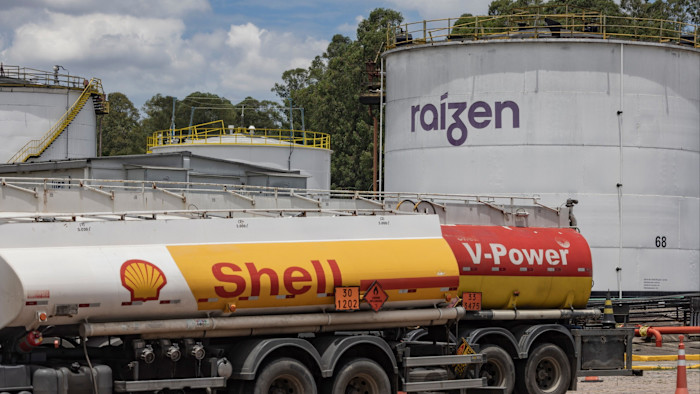
Shell is currently navigating a tough situation with one of its prominent clean energy investments, the Brazilian biofuels company Raízen. This company, the largest producer of sugarcane ethanol worldwide, operates nearly 9,000 Shell-branded gas stations across Brazil, Argentina, and Paraguay. However, Raízen has been deeply affected by poor harvests, decreased demand for fuel, and rising interest rates.
With a staggering R$55 billion (about $11 billion) in debt, Raízen has started selling off assets to stabilize its finances. Recently, they reported a significant net loss of R$15.6 billion for the third quarter, raising concerns about their future prospects.
Raízen is crucial for Brazil, being among the largest companies in the country and a key player in fueling a large portion of the nation’s vehicles, many of which can use either ethanol or gasoline. In light of this crisis, President Luiz Inácio Lula da Silva has called for meetings with Shell and other stakeholders to discuss potential rescue strategies.
Individuals familiar with the situation indicate that the government is worried about the potential impact on jobs and the broader economy since bioethanol plays an essential role in both Brazil’s transport sector and the livelihoods of sugarcane farmers.
Raízen’s financial troubles present a serious challenge for Shell, as the company is a crucial element of Shell’s clean energy strategy. Additionally, Brazil is one of Shell’s key markets, where it is the largest foreign oil producer amidst local competitor Petrobras.
Currently, Shell is cautious about its financial commitments. Raízen’s shares have plummeted to R$0.64, reflecting a 60% drop over the last year, and the company lost its investment-grade credit rating recently. Shell and Brazilian conglomerate Cosan each own 44% of Raízen following a lucrative IPO in 2021 that raised over $1 billion. They are now exploring a restructuring plan with creditors.
One proposal includes Shell injecting R$3.5 billion in fresh capital, with Cosan adding R$1 billion and R$500 million from its founder, Rubens Ometto. Moreover, creditors like Bank of America and Citigroup may convert a significant portion of their debt into equity.
There’s been discussion around potentially splitting Raízen’s fuel stations from its other operations, a move some see as logical, while others worry it could diminish the brand’s visibility in the market.
Shell favors keeping Raízen intact for simplicity and speed, especially given the high-interest rates currently in play. However, there’s a general consensus among those involved that key elements of the capital injection plan are widely supported.
Despite the efforts, skepticism remains among some creditors, who feel Shell and Cosan should increase their financial contributions to better address Raízen’s R$20 billion debt. The banks expected more substantial support from Shell, which has been critical to Raízen’s role in the energy transition.
Discussions are ongoing, with hopes for a formal agreement between Shell, Cosan, and BTG to come together soon to outline a viable path forward for Raízen.