

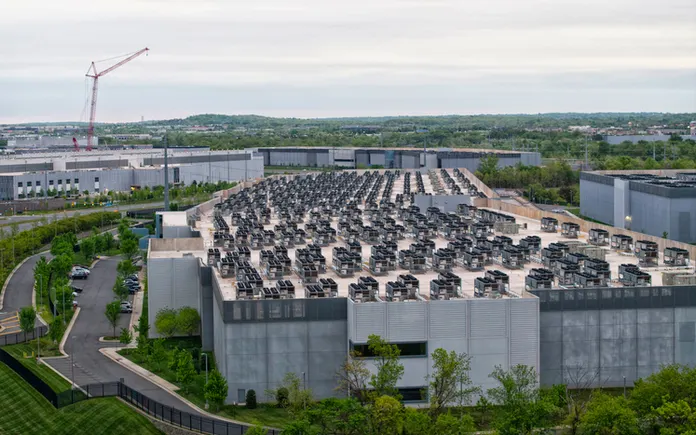
Electricity prices shot up close to double the rate of inflation in 2025, turning energy costs into a key issue for many voters. Meanwhile, demand for power driven by AI and data centers is growing rapidly. Industry experts predict that by 2030, these facilities could use almost 9% of the electricity in the U.S., which is approximately twice their current consumption.
Traditionally, when faced with rising demand, the solution was to build more infrastructure. However, this method is now fraught with challenges such as long wait times, higher finance costs, local opposition, and uncertainty about where new demand will actually arise. A recent auction in December 2025, which hit the maximum price cap but still didn’t meet the preferred reserve margin, suggested dire consequences, including a projected increase of $70 in monthly bills for households by 2028 or even potential rolling blackouts. On the flip side, projects that are overbuilt or poorly planned can saddle consumers with costs that linger for decades.
Focusing on demand-side management before committing large sums to new infrastructure can help alleviate many of these challenges. This doesn’t mean that new projects should be abandoned; rather, it suggests that we should prioritize cost-effective demand management. When financial resources are directed towards demand-side measures first, communities can avoid unnecessary costs tied to outdated and inefficient generation projects. Research indicates that these demand-side strategies can vastly enhance grid capacity at about half the cost and significantly faster than supply-side options.
For almost two decades, the energy sector has enjoyed slow and steady load growth. However, as top tech companies rush for quicker access to power, fossil fuel plants remain a common fallback. Yet, there’s a shift towards more flexible solutions emerging in the industry.
A groundbreaking report from 2026, produced by the Alliance to Save Energy along with a special group, introduces the “Bring Your Own Distributed Capacity” (BYODC) model, which was backed by Google. This approach allows large energy users to invest in crucial demand management projects, securing them capacity credits in return. With BYODC, major tech firms can not only ensure reliable energy but also foster goodwill with local customers.
Why Efficiency Should Come First
Advocates of an efficiency-first strategy draw inspiration from existing energy policies that recognize the value of energy efficiency from the outset. When any new utility program gets approved, it typically demonstrates a benefit of at least $1 for every $1 spent. Even if the rise in AI-driven electricity consumption levels off, every unit of energy saved contributes positive results for both customers and the broader grid.
Strategizing when and how infrastructure spending occurs helps prevent wasted costs. Once funds are allocated to a power station or a transmission upgrade, the choice becomes irreversible. An efficiency-first approach shields consumers from the financial burden associated with unnecessary overbuilding while ensuring funds are smartly distributed.
Often, discussions about energy efficiency focus solely on replacing old equipment with more efficient models. While this is beneficial, it overlooks the immediate savings that can be achieved through better operational management. Numerous commercial buildings still use under-optimized systems that can yield quick energy savings without any added costs.
Innovations are already underway, as state leaders introduced over 190 bills in the first 11 months of 2025 aimed at managing energy demand. Public utility commissions in several states are actively reviewing large load tariff proposals. An example is the “Clean Energy Choice” rider in tariff agreements within Kansas and Missouri. This allows large tech firms to integrate energy efficiency as a vital resource, benefiting everyone. Residential and small business customers get upgrades that save money, utilities can skip costly overcapacity, and larger firms gain the community’s trust.
What Lies Ahead
So far, discussions around energy efficiency within these legislative measures have been quite specialized. However, as the BYODC framework offers capacity at around $33 per kW-year—which is significantly lower than traditional capacity market costs—its advantages are clear. Companies required to pay for new capacity might find this approach more beneficial than conventional sources. To harness this potential while keeping costs down, here are some recommendations:
- Stakeholders should collaborate to develop standards that recognize demand-side resources, like energy efficiency, in grid planning and assess their multipronged value (i.e., energy savings, demand response).
- Regulators ought to enforce “loading orders” that compel utilities to incorporate demand-side resources into their plans before sanctioning new infrastructure, allowing utilities to count those resources towards their efficiency goals.
- Utilities should embed the BYODC model into large-load tariffs, making it easier for large companies to fund strategic demand management investments.
- Lastly, big energy users should adopt an “Efficiency First” approach to enhance their operational capacity while solidifying their community relations.
The big four tech companies were on track to allocate over $300 billion in 2025 alone—enough funding to completely cover the country’s energy efficiency needs multiple times over. Establishing a smarter, more flexible energy system involves maximizing demand-side sources, including energy-saving measures, before resorting to capital-heavy projects. This careful approach ensures that ratepayers benefit and that every dollar invested yields lasting value.