

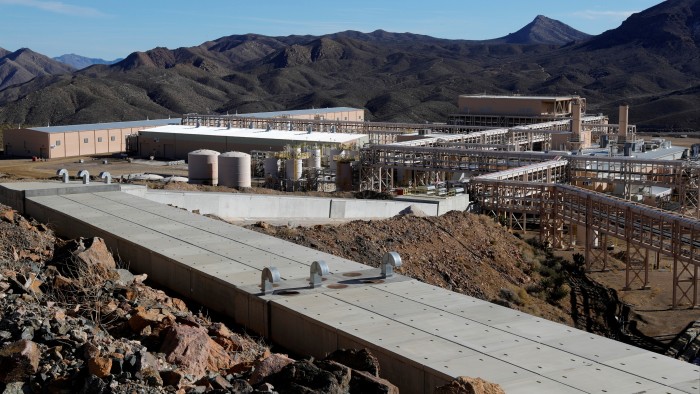
In 2015, James Litinsky took a bold $100 million risk by investing in the troubled debt of a struggling natural resources firm. This gamble has paid off significantly, thanks to shifts in U.S. government policies under Donald Trump, which positioned the company at the forefront of efforts to challenge China’s dominance in essential minerals.
Last week, shares of Litinsky’s MP Materials soared by 48% after the Pentagon announced a $400 million investment, acquiring a 15% stake in the company. Additionally, they will purchase the company’s output for the next decade at double the current market price. This surge added $200 million to Litinsky’s personal wealth and pushed the company’s stock to a three-year high.
This arrangement reflects the commitment of the Trump administration to strengthen local supply chains for 17 critical elements vital to defense and national security. “This seems pretty unusual,” noted Bill Greenwalt, a former under-secretary of defense. “Typically, the U.S. government reacts rather than proactively invests in private companies.”
Rare earth elements are key components in producing powerful magnets crucial for defense technologies, including missile guidance systems, satellite communication, and various military aircraft and weaponry. They are also used in civilian devices, such as smartphones and electric vehicles.
While the Pentagon did not provide comments on the new deal, Litinsky declined a request for an interview.
China currently dominates the market, responsible for 70% of global rare earth production and 85% of processing. The country has restricted supplies during times of diplomatic disputes, most recently earlier this year. Both the Trump and Biden administrations have prioritized bringing rare earth production back to the U.S.
Litinsky, who grew up in Florida as one of five brothers, has a history of entrepreneurship, including a ticket-scalping venture in high school. He graduated from Yale and later worked in finance before establishing his hedge fund, JHL Capital Group in 2006.
His interest in rare earth minerals was sparked during the plunge in energy prices in 2014, leading him to Molycorp, a natural resources group, and its Mountain Pass mine in California. Once the world’s largest rare earths producer, Mountain Pass ceased operations in 2002 due to strong competition from China. After going public in 2010, Molycorp filed for bankruptcy five years later.
Litinsky invested heavily in Molycorp’s debt before its bankruptcy, predicting that the growth of electric vehicles would make rare earth mining a profitable venture. In 2017, he founded MP Materials to acquire the mine and revive its operations.
MP Materials went public in 2020 through a SPAC deal that generated $545 million. The Pentagon also contributed a $45 million grant to aid the mine’s revival, alongside over $1 billion in private investments. However, the company’s stock value plummeted by more than 70% between 2021 and 2024 as China flooded the market with more supplies.
Litinsky kept a close eye on Washington and ramped up political contributions, totaling $750,000 by 2024. Experts note that MP Materials has been laying the groundwork for its current position well ahead of the recent deal, shaping the future of American mining’s relationship with government.
The Pentagon’s investment is seen as a significant move, indicating a shift in how the government supports industries critical to national security. This increased openness marks a departure from past interventions that were often less visible.
Despite the potential benefits of this new agreement, challenges remain. The Mountain Pass mine primarily produces light rare earths, but relies on importing heavier varieties essential for certain technologies. Nonetheless, many industry observers believe this deal will encourage a new mindset among American mining firms regarding government partnerships.