

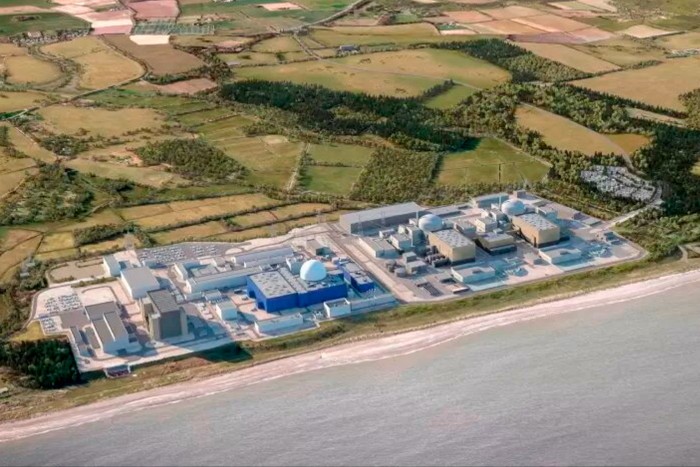
A senior Treasury minister expressed optimism that private funding for the Sizewell C nuclear power station will be secured in time for a crucial investment decision set for June. Darren Jones, the Chief Secretary to the Treasury, mentioned that this pivotal moment will align with the government’s three-year spending review, emphasizing that the final investment decision (FID) will take place in June.
He stated, “You wouldn’t take FID unless you’ve got all your investors lined up. We will do.” The UK government, in collaboration with the French energy company EDF, is working to raise significant funds from investors. Initially, they aimed to make a decision on the project last year, but rising costs have caused delays, with the price now exceeding the £20 billion estimate from 2020.
Officials and industry leaders believe that Sizewell C will receive substantial funding from British taxpayers, along with investments from sovereign wealth funds and institutional investors. The government is currently in talks with potential investors, including Centrica and the Emirates Nuclear Energy Company, but there are uncertainties regarding their commitments due to the project’s escalating expenses.
Despite the hiccups, Jones mentioned that the government has already allocated billions for preliminary works at the site. He explained that the decision was postponed last year to synchronize with the broader spending review and infrastructure goals.
Jones’ remarks come amid a leadership change at EDF, where CEO Luc Rémont was dismissed by the French government following strategic disagreements. Bernard Fontana is set to succeed him, but his confirmation is dependent on upcoming parliamentary hearings, which may further complicate EDF’s nuclear project timelines in both France and the UK.
Jones also addressed the creation of a new authority aimed at improving infrastructure delivery in the UK, which he described as falling short compared to other countries. This authority will unify infrastructure strategy and delivery, with efforts to streamline project execution and provide better oversight.
To bolster this initiative, the government is set to unveil a new infrastructure strategy that will outline priorities for upcoming transport, energy, and water projects, alongside a focus on the role of private investment in various sectors. This includes the recently approved £10 billion Lower Thames Crossing, which is anticipated to be largely funded by the private sector, marking the first major Thames river crossing to be built east of London in six decades.