

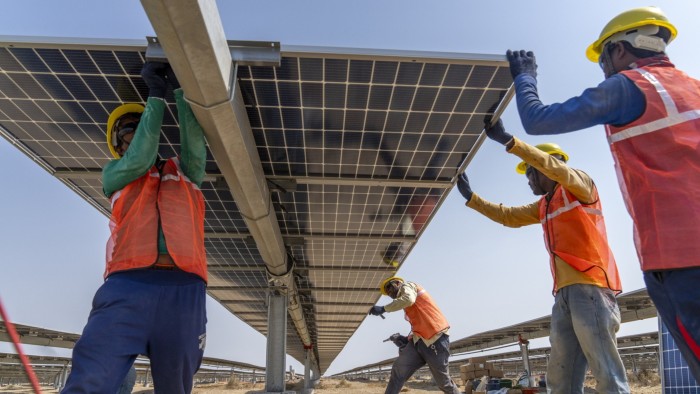
India’s renewable energy sector faces a significant challenge in securing enough investments and foreign financing to meet its ambitious goal of more than doubling the capacity of non-fossil fuel energy sources by 2030, according to experts and industry leaders.
Last year, India, which is the third-largest emitter of greenhouse gases in the world, attracted just over $13 billion in green energy investments. However, this figure falls drastically short of the required $68 billion annually needed to achieve its objective of generating 500 gigawatts of power from renewable sources within the same timeframe, as highlighted in a recent report by energy think-tank Ember.
Neshwin Rodrigues, a senior energy analyst for Ember, emphasized the urgent financial gap, stating, “There is a clear need for significantly more investment in renewables, far beyond what is currently available.” Overall, the report suggested that India would need around $300 billion in capital flow by 2032 to stay aligned with its renewable energy ambitions.
Currently, India has about 209 gigawatts of installed renewable energy capacity, contributing less than 25% to the nation’s total power generation. In comparison, China, the largest global polluter, sources approximately 35% of its energy from clean sources, excluding nuclear energy.
Obstacles to financing include project delays caused by challenges in acquiring land, issues with grid connectivity, and regulatory complications. The US has also recently leveled accusations against Gautam Adani, head of Adani Green Energy, alleging involvement in a bribery scheme to secure contracts in India, claims that the Adani Group has strongly denied. Such controversies, as noted by Vibhuti Garg from the Institute for Energy Economics and Financial Analysis, are likely to increase perceived risks for investors.
Moody’s has warned that India’s power sector should aim to invest up to 2% of its GDP over the next decade to fulfill Prime Minister Narendra Modi’s commitment to achieving net-zero emissions by 2070—a figure higher than the projected investments for China and Australia during that period.
According to a report from S&P Global’s India subsidiary Crisil, India’s green investments amounted to nearly $70 billion from 2019 to 2024. To meet its renewable energy objectives, this figure needs to rise to $350 billion in the next five years, a challenging task given that low-carbon projects are often viewed as high-risk.
The need for improved access to long-term, low-cost capital, especially from foreign financiers, is essential to bridge the investment gap in India’s renewable energy sector. Last month, India’s Minister for New and Renewable Energy, Pralhad Joshi, indicated that the sector requires enhanced financial support.
Efforts to raise international funds have been complicated by protectionist policies that limit options for hedging against long-term currency fluctuations and government-fixed electricity prices. Despite the availability of international equity funding and increased lending from domestic banks, many Indian firms still face difficulties tapping into the international bond market.
High global interest rates and rising expectations from investors for returns present additional hurdles for fundraising. Vinay Rustagi, a renewable energy expert, pointed out that investment preferences have become more selective, making it tougher for the Indian renewable sector to secure the funds it needs.