

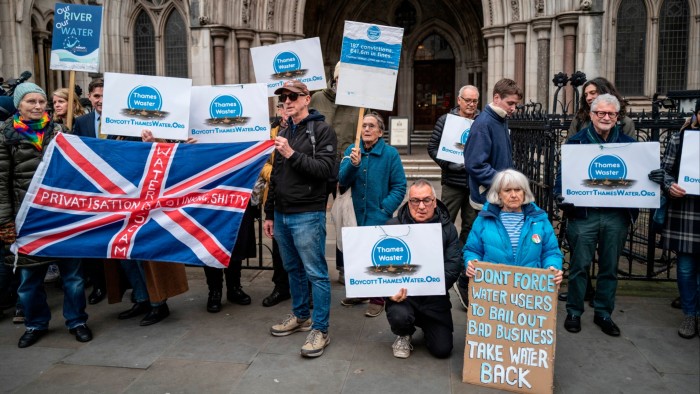
Thames Water is facing a new legal challenge as it seeks to secure an emergency loan of up to £3 billion. Environmental activists are arguing that the heavily indebted utility should be temporarily renationalised instead. The group known as “Windrush against Sewage Pollution” plans to present its case in court this February. A judge will then determine whether to approve the proposed loan which is aimed at giving Thames Water some breathing space to restructure its substantial £19 billion debt.
The loan is offered by a group of existing creditors, including prominent hedge funds like Elliott Management. It carries a hefty interest rate of 9.75%, alongside other fees that could benefit the company’s management.
Without this loan, Thames Water could be put under government control through a special administration process. Currently, the company has enough funds to operate until the end of March.
Ashley Smith from the Windrush campaign criticized the lenders, saying they are focused on enriching themselves rather than protecting vital water resources or stopping illegal sewage contamination. He emphasized that consumers should be involved in decisions after years of feeling exploited by monopolistic water providers.
The campaign group has already prepared its case through solicitors and is expected to be allowed to contribute during the upcoming court hearing.
Meanwhile, another creditor group, known as class B creditors, is also contesting the deal, claiming they have a more affordable proposal. They believe if their arrangement is overlooked, they would be better positioned under special administration.
Under special administration, an outside manager would take control of Thames Water, relieving it from paying interest on debts. This would allow financial resources to be directed towards essential maintenance and improvements. Importantly, the existing debt would be essentially frozen, which could lead to negotiations that would lighten the burden for creditors.
Experts suggest that this process could involve a “haircut” for creditors, reducing the outstanding debt to a more manageable level. Hedge funds, like Elliott, that have recently acquired this debt would be betting on how significant that reduction might be, hoping to profit from the outcome.
Professor Dieter Helm from Oxford University argues that special administration would allow Thames Water to concentrate on restructuring and enhancing service, rather than being tied up in negotiations with lenders.
In response, Thames Water has claimed that their current plan is the only feasible way to move forward and to meet both customer and stakeholder needs. A spokesperson for the class A creditors stated their commitment to a complex restructuring that aims to avoid special administration, ultimately saving British taxpayers from increased costs.