

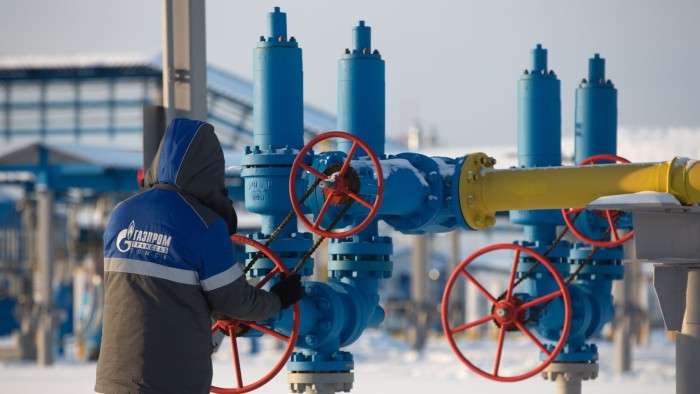
The Biden administration has recently announced significant sanctions aimed at the Russian energy sector, targeting Moscow’s oil revenue just days before Donald Trump is set to take office. This new set of sanctions includes restrictions on major Russian oil companies, such as Gazprom Neft and Surgutneftegas, as well as the blacklisting of 183 vessels linked to Russian energy exports.
Several traders, oilfield service providers operating in Russia, and various energy officials have also come under sanction. According to the U.S. Treasury, the United Kingdom will collaborate with the U.S. on regulating these two key oil producers.
UK Foreign Secretary David Lammy remarked that these actions are intended to diminish Russia’s war funding, stating, “Every rouble we take from Putin’s hands helps save Ukrainian lives.” Following this announcement, the price of Brent oil, a key international benchmark, surged to a three-month peak of $79 per barrel.
The outgoing Biden administration explained that this decisive action was made possible due to the expected oversupply in the oil market come 2025. They also noted that U.S. inflation had recently decreased to align closer with the Federal Reserve’s target of 2%.
A senior official from the Biden administration commented, “The context changed, and so the moment was ripe to change our strategy.” This last-minute development presents a challenge for President-elect Trump, who has expressed a desire to end the war between Russia and Ukraine quickly. Previously, he indicated he would prefer to minimize the use of sanctions.
Should Trump attempt to reverse these sanctions, he could encounter pushback from Congress, where some Republican members had urged for more stringent actions against Russian energy revenues. Under the existing sanctions protocols, Congress would be informed of any attempts to overturn the new measures, allowing them to potentially vote on them.
The Biden administration hopes these sanctions will provide the incoming Trump administration with tools to address the ongoing conflict in Ukraine. Despite claiming he could resolve the war in just 24 hours during his campaign, Trump has revised that timeline to six months.
As part of the sanctions package, the U.S. State Department has blocked two active Russian liquefied natural gas facilities and a significant oil project. They have also targeted foreign organizations that support Russian energy exports and blacklisted additional service providers and officials associated with Rosatom, Russia’s state-run nuclear energy agency.
The decision to sanction 183 vessels directly, as opposed to the companies that operate them, could have major consequences. According to analysis, oil tankers previously sanctioned by the U.S. have been forced to carry much less oil, as working with them has become too risky for their business partners.
Each of the newly sanctioned vessels has been linked to operations involving fuel trading above the established $60 price cap for Russian oil since December 2022. This long-term strategy aims to restrict the Kremlin’s oil revenue while still allowing some Russian oil to flow into the market.
One major Russian company involved in insuring vessels used in the shadow fleet was also added to the sanctions list. If these new restrictions are successfully enforced, they could significantly undermine Russia’s oil income, potentially costing the country billions of dollars monthly.
U.S. Treasury Secretary Janet Yellen emphasized, “We are intensifying the sanctions risk associated with Russia’s oil trade.” Gazprom Neft has condemned the sanctions as “unjustified” and claims they have already been integrated into their operations.
Since Russia’s full-scale invasion of Ukraine in February 2022, over 5,000 U.S. sanctions and export controls have been imposed on Russia. These latest measures follow the Biden administration’s decision from November 2024 to sanction Gazprombank, the main financial channel for Russia’s energy payments, as part of ongoing efforts to limit the Kremlin’s ability to finance its military endeavors.