

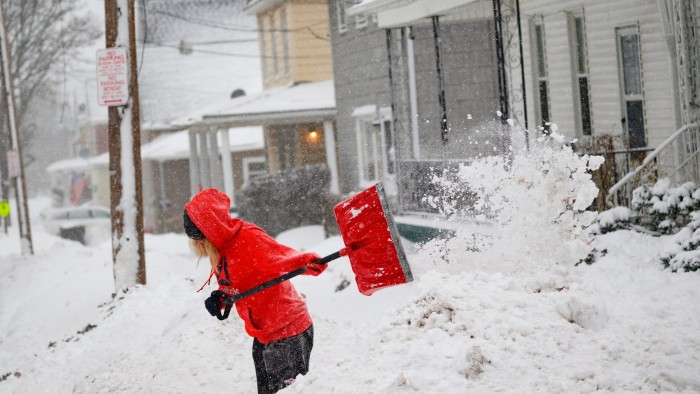
US energy prices for home heating fuels are soaring as a polar vortex sweeps across the nation, stirring up market activity that had quieted during several mild winters.
In just the past week, natural gas prices have surged by 4%, and they’ve climbed 14% over the last month, with the benchmark Henry Hub trading at $3.66 per million British thermal units on Thursday. Some contracts peaked at $4.20 per million BTU earlier in the week.
Heating oil futures also show a significant increase, rising 5% weekly, with New York Harbor contracts trading around $2.35 a gallon on Thursday.
As winter sets in, it’s typical for heating fuel prices to rise. However, many areas in the northern US are bracing for what could be the coldest January in over ten years, a surprising shift after the warm winter of the previous year. According to the National Centers for Environmental Information, last year’s winter was the warmest on record.
Phil Flynn, an analyst with Price Futures Group, noted that the market had been overly complacent with rising US production and high inventories. However, it might now face winter challenges not seen for some time.
Around 47% of US households rely on gas for heating, while 40% depend on electricity, according to the US Census. Heating oil remains in use in certain Northeastern regions.
The spike in fuel prices aligns with forecasts of an “Arctic outbreak” affecting the eastern and central US, with the National Weather Service warning of severe cold and dangerous wind chills.
The temperatures could plummet below zero, potentially impacting crops as far south as the Gulf Coast and Florida.
Flynn cautioned that if the weather predictions hold true, the price increase could be significant, especially if Arctic cold hits the Texas shale regions, potentially disrupting gas supplies at a time when calm weather could inhibit wind energy generation. It’s possible natural gas prices could rise by over a dollar.
The US Energy Information Administration predicts that household spending on winter heating will remain stable compared to last year, except for the Midwest, which is expected to see gas prices rise by 11% and electricity by 6%. The Northeast might also experience a 5% increase in electricity costs.
These higher prices come at a challenging time for families, many of whom are already struggling to manage utility expenses. A recent analysis showed that over one-third of US households had to cut back on essential costs like food and medicine to afford their utility bills, with nearly 25% unable to pay their bills at all.
Akshat Kasliwal, a power analyst at PA Consulting, emphasized the need to consider the broader implications of these price changes, highlighting serious economic and human losses.
As the country’s ageing electricity grid faces increasing risks from extreme weather and rising power demands driven by AI and the energy shift, storms have caused significant troubles in gas supply. The EIA reported that winter storms, such as Uri in 2021 and Elliot in 2022, led to substantial declines in natural gas production.
Scott Shelton, an energy analyst at TP ICAP, noted that while the market seems prepared for the cold snap, the upcoming challenges may be even more daunting.