

In the world of fashion, some trends simply refuse to fade. A perfect example is the love some have for skinny jeans, like the iconic style of Kate Moss. Similarly, in the corporate landscape, a structure known as the dual-listed company (DLC) has its own devoted following.
A DLC structure allows two companies to maintain their separate legal identities and stock market listings while operating as one business. This approach can offer certain benefits, such as potential tax advantages. However, many analysts now view DLCs as outdated and possibly detrimental, especially when it comes to major mergers and acquisitions (M&A). Several high-profile companies, including BHP, Shell, and Unilever, have recently moved away from this structure, often motivated by activist investors.
Currently, Rio Tinto, a company that has relied on the DLC model for nearly three decades, faces pressure from Palliser Capital, an activist fund. Palliser is urging Rio to streamline its corporate structure and move its main listing to Sydney.
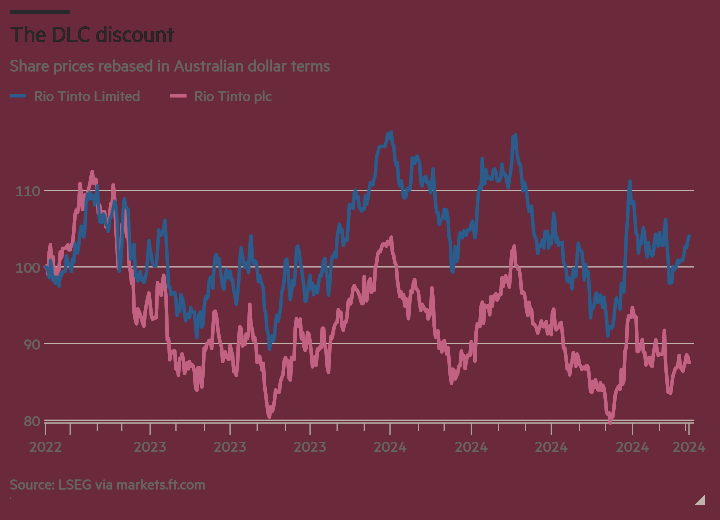
Palliser has intensified its campaign this week, arguing that Rio’s complicated setup has been a failure. They point out that most companies have moved on from establishing DLCs. Rio’s shares listed in London are trading at a significant discount—about 19% lower—compared to those listed in Sydney. This discrepancy could complicate potential mining mergers since such deals typically involve stock offers.
While technically possible, the unique challenges of a DLC structure often lead Rio to prefer cash transactions for acquisitions. This issue isn’t new. Rio’s CEO, Jakob Stausholm, has weighed the benefits of simplifying the company’s structure. However, different conclusions have emerged regarding crucial factors, particularly concerning tax liabilities. Rio estimates the tax impact could reach billions, while Palliser argues it would be around $400 million. Additionally, there’s debate about how shares of a unified company would be valued.
This situation recalls the conflict between BHP and activist Elliott Advisors, who pushed for BHP to abandon its DLC framework. BHP, which had stronger ties to Australia, shifted focus to enhancing its business and returning to significant acquisitions.
As of now, Rio is taking a cautious approach. Its largest transaction since 2007 is its recent $6.7 billion acquisition of Arcadium Lithium. Stausholm has also voiced concerns about the risks of large M&A deals.
This issue surrounding the DLC structure is far from settled. However, it’s clear that simply following the crowd isn’t enough for Rio to abandon a long-standing business model.