

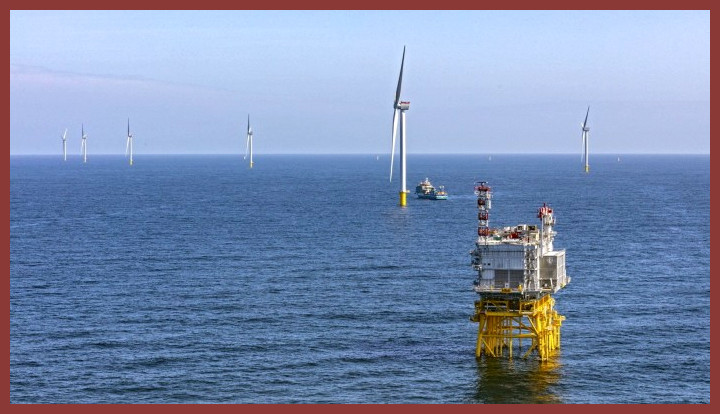
Shell has announced that it will not launch any new offshore wind projects, marking a significant shift in its approach to renewable energy under CEO Wael Sawan. The company, headquartered in the UK, plans to maintain its existing offshore wind farms in the Netherlands and continue work on its current projects across Europe, the US, and the UK. However, it will not spearhead any new initiatives in the offshore wind sector.
In a statement, Shell emphasized its aim to “maximize the value of our existing renewable generation platforms.” While the company indicated its willingness to consider off-take agreements where the terms are commercially viable, it also showed cautious openness to equity investments if the propositions are compelling.
These announcements followed a review aimed at reducing costs, streamlining strategies, and enhancing returns, as first reported by Reuters. In October, Sawan mentioned to analysts that although Shell is committed to transitioning towards cleaner energy, it is stepping back in specific areas, including renewable generation. He stated that the company has learned that it does not hold significant advantages in generating returns from renewable sources compared to other companies.
Additionally, BP has also moved away from wind energy, recently listing its US onshore wind assets for sale. However, Shell did not comment on whether it plans to divest parts of its current pipeline or seek additional investments from outside sources.
This shift comes in response to challenging conditions within the offshore wind industry, which faces rising costs and supply chain issues. Major players like Ørsted have adjusted their growth targets downward after abandoning two offshore wind projects in the US. Meanwhile, Equinor has also reduced its early-stage developments in some markets.
Interest rates are affecting new projects as they typically require significant upfront investment and involve lengthy development timelines. Jérôme Guillet, managing director at Snow, a renewable energy consultancy, noted that many utilities are becoming more selective in their offshore wind investments, focusing on fewer projects. He pointed out that investors prefer Shell to allocate its resources elsewhere, as offshore wind tends to generate lower returns compared to oil and gas.
While Shell remains committed to some form of renewable energy, it is choosing to make more selective investments in power generation and storage solutions. The company plans to leverage its expertise in power trading and business-to-business sales to create value and reduce emissions. Furthermore, Shell intends to utilize gas-fired power plants and batteries in chosen markets to handle fluctuating energy supply as more renewables are integrated into power grids.
In 2022, Shell’s cash expenditure on low-carbon energy dropped to $2.7 billion, down from $3.5 billion the year before. The company currently possesses around 3.4GW of renewable energy capacity, sufficient to power 16 million homes in the UK for a year. It has 2GW of offshore wind operational or under development, along with an additional 7.9GW in the planning stages. Additionally, Shell is restructuring its energy business by separating its renewable power generation and trading units to streamline operations.