

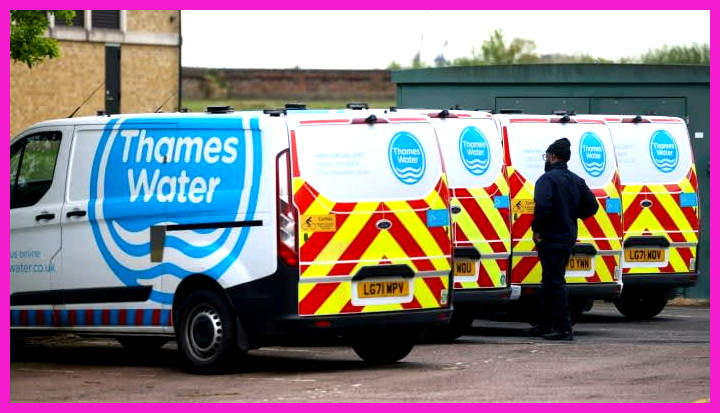
As the tumultuous saga of Thames Water unfolds, Friday marked a pivotal moment in the beleaguered utility’s fight for financial survival. A contentious rift emerged among debtholders over a proposed emergency loan of £1.5 billion, coupled with a restructuring plan necessary to avert an impending financial calamity by Christmas.
The gravity of the situation is not lost on the beleaguered company, which supplies water and sewage services to around 16 million households across the sprawling landscapes of southeast England. With an overwhelming debt burden of £19 billion and tepid demand for its ambitious £3 billion equity raise from infrastructure investors, the stakes couldn’t be higher.
In a dramatic turn, a coalition of creditors fired off a missive to Thames Water, expressing their dissatisfaction over being sidelined from crucial loan negotiations. The utility’s precarious financial state has prompted urgent discussions to stave off a cash crunch, with frank warnings issued that they may soon find themselves without immediate liquidity, pushing them dangerously close to operational collapse post-Christmas.
These dissenting creditors, holders of lower-ranking bonds, enlisted the formidable legal expertise of Quinn Emanuel, a litigation powerhouse, to safeguard their interests after finding themselves ousted from negotiations by a larger bondholder group just the day before. Their frustration was palpable. “Our clients are deeply troubled by the apparent rush towards a restructuring deal without meaningful consultation with a key group of creditors,” the law firm articulated in a pointed correspondence to Thames Water’s legal representatives on Friday evening.
Thames Water remained tight-lipped, adding to the air of uncertainty that encircles the company’s prospects.
This rift amplifies the complexity and urgency surrounding the utility’s endeavor to escape financial doom. The myriad creditors involved must come to a consensus, or the company risks governmental intervention under the special administration regime, where renationalization looms ominously on the horizon.
The distressed creditors, which reportedly include hedge funds, banks, and insurers, hold a substantial share of Thames Water’s £1.4 billion class B debt. Should the imminent restructuring falter, they face the grim prospect of significant losses or having their investments rendered worthless in the event of renationalization. On Friday, class B bonds floundered in trading, barely clinging to a value of 20 pence on the pound, a stark reflection of the dire recovery outlook.
Earlier in the week, these lower-ranking bondholders were ousted from the ranks of Thames Water’s principal creditor committee, a group of over 100 financial institutions wielding more than £10 billion in bonds. In the meantime, remnants of the class A debt holders have been actively negotiating an emergency loan plan, positioning it to take precedence over all existing debts in this precarious financial landscape.
Advisers to the class A bondholders issued a cautionary note to class B holders on Thursday regarding an escalating “conflict of interest” that could emerge, given the hierarchical nature of their debts. With approximately £16 billion of class A debt still outstanding, should insolvency ever rear its head, these higher-ranking obligations would supersede class B interests.
The largest entities among the class A bondholders are courting Thames Water for a “new money” loan, intent on formally laying out terms in the upcoming weeks. Quinn Emanuel’s legal team was unequivocal in their stance on Friday, asserting, “Negotiations with any single creditor faction cannot yield the optimal deal for Thames Water.” They emphasized the necessity of structuring any new financial contributions to ensure they don’t hamper the engineering of an eventual equity raise.
In an intriguing twist, the correspondence hinted at the potential for class B holders to not only be pivotal in generating “significant new money” for Thames Water but also to offer competitive, perhaps even enticing, funding solutions. The plot thickens as stakeholders grapple with the future of one of the UK’s essential utilities.