

In the intricate tapestry of Europe’s evolving industrial landscape, three disparate threads intertwine, revealing a narrative fraught with tension and uncertainty. A Norwegian car dealership contemplates a return to selling petrol and diesel vehicles next year, while a Swedish industrial start-up, despite already amassing a staggering $15 billion, desperately seeks fresh financing. Concurrently, the adoption of heat pumps across Europe has stagnated, casting shadows on the continent’s ambitious green transition.
These seemingly unrelated events coalesce into a larger commentary on the challenges besetting European business leaders as they navigate the complexities of the shift toward sustainable practices. A palpable anxiety permeates their discussions, as many express skepticism over policymakers’ readiness to address the monumental costs looming on the horizon—estimated in the hundreds of billions of euros needed in investments and subsidies. “Without decisive action, we risk ceding ground to more nimble competitors like China and the United States,” warns one European industrialist, encapsulating the urgency of the moment.
Take, for instance, the automotive sector. There exists a notable resistance from car manufacturers across Europe regarding the proposed 2035 ban on fossil fuel vehicles. Yet, Norway shines as a beacon of progress, on track to transition entirely to electric vehicles as early as next year, buoyed by enticing incentives. Ironically, the primary beneficiaries of this shift are not the traditional automakers; names like Tesla and the newly arrived Chinese brand Nio dominate the Norwegian market. However, just as the enthusiasm builds, Norway’s recent budget announcements reveal the fragility of this transition. A slight rollback in taxes for fossil fuel vehicles has prompted the country’s leading auto dealership to reconsider the prospects of reviving petrol and diesel sales.
Yet, any hope for a respite for European industries might be ephemeral. As Brussels advances the implementation of tariffs on subsidized Chinese electric vehicles, considerations of competitiveness intensify. Simulations conducted by the European Central Bank, highlighted by former president Mario Draghi, paint a worrying picture: should Chinese car manufacturers receive subsidies akin to those granted to their solar industry, EU electric vehicle production could plummet by an astonishing 70%, jeopardizing nearly 30% of European manufacturers’ global market share.
Vincent Clerc, the chief executive of the shipping behemoth AP Møller-Maersk, articulates the ominous dichotomy facing Europe: It can either impose tariffs designed to protect established industries, ultimately stalling the green transition, or it can strive to cultivate new champions through innovation and foresight.
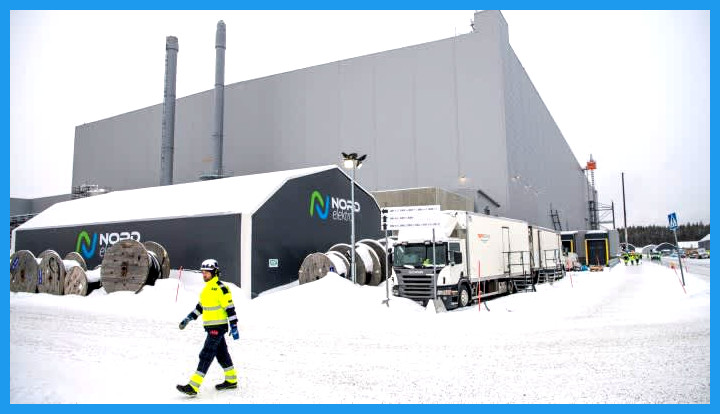
This struggle is epitomized by the saga of Northvolt, a flagship Swedish battery factory hailed as Europe’s countermeasure to Asian manufacturing dominance. Despite its impressive capital accumulation, Northvolt finds itself in dire straits, grappling with the very real need for additional funding while operating at a fraction of its intended capacity.
Meanwhile, the United States has unleashed a torrent of subsidies through the Inflation Reduction Act, with Northvolt estimating potential backing of over €8 billion for its factory, in stark contrast to the limited support from European nations such as Germany. Sweden, notably, has dismissed the possibility of a state rescue for the beleaguered battery maker, leaving critical questions unanswered: “What future does Europe hold without cars, without batteries?” one concerned Swedish entrepreneur queries, echoing the anxiety felt by the 14 million individuals employed within the EU’s automotive industry.
This disconcerting pattern echoes across various sectors as the cost and pace of the green transition remain contentious topics. Sales of heat pumps—sought for their energy efficiency and lower emissions—plummeted nearly 50% in Europe during the first half of the year, a disheartening outcome linked to waning subsidies. Germany’s recent decision to weaken its ban on new gas and oil boilers, prompted by widespread public dissent, illustrates the precarious balance policymakers must negotiate. Even in domains where Europe once wielded considerable influence, the tide has shifted; Draghi highlights the EU’s fading dominance in hydrogen venture capital—from two-thirds in the 2015-2019 period to a mere 10% from 2020 to 2022.
This mounting unrest among European industrialists crescendos into a clarion call for policymakers to invest significantly in the development of a robust green industrial framework. As Clerc emphasizes, “The path to a green transition is uncharted terrain that none can traverse in isolation. It is a complex, protracted journey.” The stakes have never been higher, and the time for decisive action is now.