

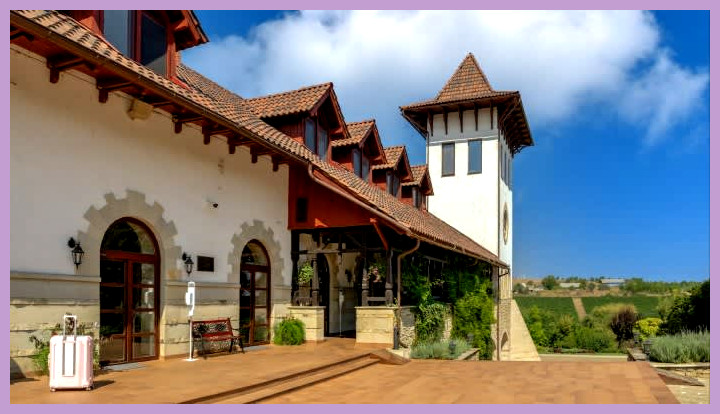
In the heart of Eastern Europe, where rolling vineyards intertwine with the echoes of history, Moldova is witnessing a dynamic transformation. Wineries—once entrenched in the complexities of energy dependency, primarily on Russian gas—are making a remarkable pivot towards renewable energy sources. This shift resonates with Moldova’s broader aspirations to align more closely with the West, especially in light of geopolitical tensions following Russia’s aggressive maneuvers in Ukraine.
Cricova, a storied vineyard established in 1952 under a decree signed by none other than Joseph Stalin, stands as a beacon of this change. By investing in solar parks and fortifying its insulation, Cricova has successfully slashed its energy costs by an impressive 25%. “The entire process of wine production has been modernized,” asserted Sorin Maslo, Cricova’s director, underscoring a commitment to adapting to evolving consumer demands and global trends.
With the specter of Russia’s full-scale invasion of Ukraine looming large, Moldova has accelerated its trajectory toward the West, hastening its application for EU membership while simultaneously seeking alternatives to the monopolistic hold of Gazprom. The country’s winemakers, a vital cog in the national economy, echoed this urgent shift, launching initiatives to install solar panels and enhance energy efficiency within their facilities. Symbolically powerful, Cricova even removed a display of Vladimir Putin’s lavish wine collection—a gift from the Moldovan government during the Russian leader’s 2008 visit—reflecting a significant ideological departure.
The Moldovan Ministry of Energy reports that the past year has seen households and commercial enterprises triple their engagement with renewable energy sources, particularly photovoltaics. Even smaller-scale operations like the fledgling winery Luca have thrived thanks to state incentives aimed at fostering eco-friendly practices. Ion Luca, the winery’s owner, reveals an unwavering commitment to sustainability from the outset. Since laying down the first bricks in 2018, he opted for insulation and an electricity-powered heat pump—shunning gas and any ties to Gazprom’s influence. “We were Gazprom’s hostages, and I refused to be ensnared,” he stated emphatically.
Ion Luca carries a heavy legacy as a fourth-generation winemaker. His family’s conflict with the Soviet regime began in 1944 when his grandparents were stripped of their home and vineyards, branded as “enemies of the people,” before being shipped off to Siberia during one of Stalin’s infamous purges. Upon returning after the dictator’s death, his family helped establish the Soviet’s Cricova winery but never reclaimed their ancestral land. In a significant reclamation of agency, Ion Luca acquired his own vineyard in 2018, aspiring to mold it into “the most sustainable winery” in Moldova.
In parallel, Purcari—a brand that has successfully penetrated Western markets after shunning Russian ties—also joins the green movement. Vasile Tofan, Purcari’s board chair, reflects on a tumultuous past punctuated by Russian embargoes that initially left the winery “on its knees.” However, these challenges ultimately became a fortuitous catalyst, galvanizing their westward pivot. In 2014, as Russia’s shadow lengthened over Crimea, Purcari unveiled a bold creation dubbed the Freedom Blend, which incorporates grapes from Crimea, Georgia, and Moldova—an act of defiance and unity that has gained traction in international markets.
As Cricova, Luca, and Purcari collectively explore sustainability, they are increasingly investing in lighter bottles, cognizant that the bulk of the industry’s carbon footprint arises from producing and transporting heavy glass. Additionally, Luca’s innovation includes exporting bag-in-box wines to Scandinavian consumers, a strategic move that further aligns with eco-conscious trends.
Diana Lazăr, senior wine director at the international development entity Chemonics, highlights this renaissance, emphasizing that the revival of local grape varieties—once suppressed during the Soviet era—could significantly enhance exports. As Moldova navigates its tumultuous landscape, Russia’s tightening grip on the economy has inadvertently catalyzed a transition toward a more sustainable business model. This evolution is not merely a responsive measure but a proactive strategic alignment with global trends, positioning Moldovan winemakers for long-term competitiveness in the ever-changing marketplace.