

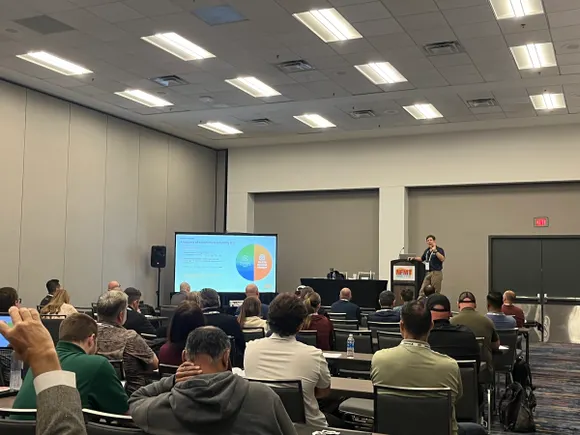
CHARLOTTE, N.C. – Attendees at the National Facilities Management & Technology East 2026 conference learned that effective energy management systems can significantly reduce electricity costs. Richard Fox, Senior Vice President of Engineering at Sanalife Energy, emphasized the importance of managing peak energy demand.
Fox explained that utilities charge demand fees based on the highest amount of electricity a facility uses, which incentivizes businesses to lower their peak load. According to him, failing to do so can lead to significant increases in costs.
He shared that demand charges can go as high as $70 per kilowatt. “Every kilowatt you can reduce on peak demand translates to substantial savings,” he stated. For instance, reducing demand by 10 kilowatts could lead to a savings of $700, while trimming 100 kilowatts could save $7,000.
Fox noted that prices for demand charges vary by region; they can be as low as $10 per kilowatt in some southern areas. Even when costs are lower, he insisted that maintaining low peak energy usage over time can greatly benefit facilities financially.
The timing of energy usage is equally critical, with demand pricing often determined by a short 15-minute window during the billing cycle. Fox explained that understanding utility rules and tariff schedules is vital for managing these costs effectively, as they can vary significantly.
He pointed out that as demand charges affect more customers, energy management systems will become increasingly vital for facilities. Operators are encouraged to utilize occupancy data and their systems to monitor energy use, which can help inform decisions or automate processes, such as adjusting HVAC settings or implementing battery systems for better energy efficiency.
Fox elaborated on the advancements in energy management systems, stating that they now can track more data points at lower costs and boast improved reliability. This enables facilities to gain better insights into energy use, transitioning toward more automated demand management strategies.
With these developments, businesses can proactively manage their energy peaks, ultimately enhancing their overall energy efficiency and reducing costs.