

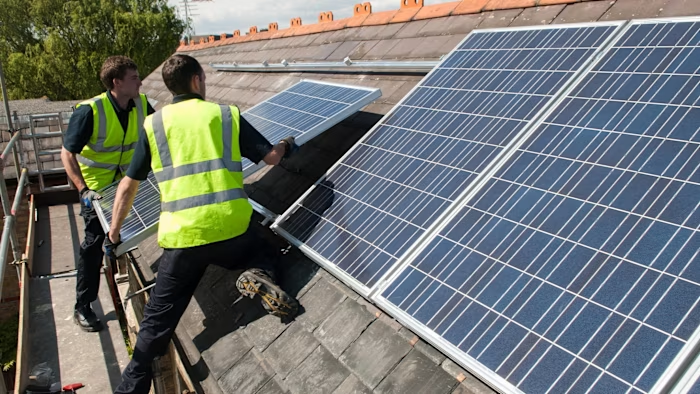
Ministers in the UK are changing their approach to home improvements by focusing more on technologies like solar panels, batteries, and heat pumps instead of just insulation. The goal is to help one million families escape fuel poverty.
Energy Secretary Ed Miliband announced a £15 billion investment plan over five years aimed at assisting lower-income households. This funding is designed to encourage families to install clean energy products that can help lower their energy bills.
“This investment marks the start of a nationwide effort to combat fuel poverty and address the affordability crisis facing families across Britain,” Miliband stated while unveiling details of the long-awaited warm homes initiative. He described the spending as the “largest homes upgrade plan in British history.”
The government is under pressure to achieve its climate goals, including reaching net-zero carbon emissions by 2050. This will require significant reductions in carbon emissions from electricity, transport, and residential buildings. Miliband has also pledged to reduce energy bills by £300 by 2030, although some critics doubt this is feasible due to rising costs associated with energy grid improvements.
This new funding announcement is more than the £10 billion spent during the last parliament on similar initiatives under the previous Conservative government, according to Labour officials. The current administration acknowledged that while the prices of products like batteries and heat pumps are decreasing, they still remain unaffordable for many households.
Chris Norbury, CEO of E.ON UK, emphasized that enabling households to generate and store their own energy would be the most effective way to lower bills. “This approach empowers customers and transforms the energy system to be more beneficial for everyone,” he explained.
Anna Moore, CEO of Domna, a retrofit contractor, remarked that the scale of this program could be transformative. However, she stressed the importance of effectively implementing the plan. “We need to ensure the right solutions for each home. Insulation and draught-proofing often make the biggest difference when it comes to comfort and preventing issues like dampness,” she noted.
Additionally, the government has introduced “Future Homes and Buildings Standards,” which will require builders to install solar panels, heat pumps, and other energy-efficient measures in most new homes by default. The aim is to increase the number of homes with solar panels to 4.5 million by 2030, up from the current 1.5 million.
The government has also set a new goal of installing 450,000 heat pumps annually, which is lower than the previous target of 600,000 by 2028 set by the Conservative government. Currently, the installation rate for heat pumps is in the tens of thousands, far below what is needed to meet the UK’s carbon targets.
A new organization, the Warm Homes Agency, will be established to streamline and manage the delivery of this ambitious program.