

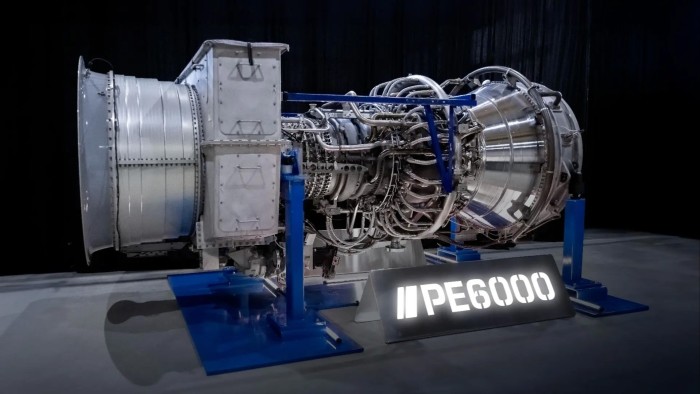
This year’s Data Center World Power show in San Antonio, Texas, highlighted an intriguing innovation: a gas turbine repurposed from a retired passenger plane. This mini power plant, crafted by ProEnergy, can generate enough electricity to serve around 40,000 households, underscoring the pressing challenges in the global power sector.
As the demand for energy continues to rise—almost 4% a year—mainly driven by the needs of artificial intelligence and increasing electricity consumption, power producers are racing to secure essential components like electric cables and turbines. Fabricio Sousa, president of Worley Consulting, notes that firms are facing long waits, sometimes stretching over five years, for critical pieces, leading to significant supply chain delays.
Beyond growing demand, interruptions from tariffs and China’s rapid expansion of renewable energy infrastructure are also complicating the situation. Notably, the renewable energy sector seems less affected by these shortages, thanks to ongoing investments and lowered production costs.
Experts like Antoine Vagneur-Jones from BloombergNEF emphasize that while many areas of energy production face shortages, sectors like renewable energy enjoy a surplus. Data centers, despite some supply constraints, are better positioned due to their purchasing power, but they still face higher costs for essential components.
The scarcity of materials has resulted in a surge in prices. Since 2020, the price index for power transformers in the U.S. has soared by 71%. In response, manufacturers are ramping up production—companies like Hitachi Energy plan substantial investments to enhance their infrastructure capacity.
Some manufacturers are also adopting regional strategies to improve responsiveness to demand. For instance, Schneider Electric operates facilities across multiple regions to swiftly address changing needs in energy production.
However, BloombergNEF’s Vagneur-Jones expresses skepticism that these efforts will fully address current shortages or future demands. Manufacturers, wary of past overexpansions, are proceeding cautiously.
Many large consumers, like data centers, are now investing in their own power generation, but acquiring gas turbines remains a challenge. Alternatives like smaller gas turbines and combustion engines are easier to obtain but come with trade-offs, such as limited power output or design constraints.
While options like fuel cells are costly, and other solutions like geothermal energy remain experimental, the potential for renewable power combined with battery storage offers a hopeful path. Mike Hemsley from the Energy Transitions Commission notes that, despite some challenges, this combination could be a viable solution.
Lastly, tackling material shortages through redesigning products could help alleviate supply issues. Using more accessible materials, such as aluminum for electric cables instead of copper, might offer a way forward. Nonetheless, there is concern that reverting to fossil fuel solutions could hinder the progress toward greening the grid.
Claus Wattendrup from Vattenfall calls for consistent government support and stable policies to ensure a steady demand, vital for justifying investments in new manufacturing capabilities. Without this certainty, the energy sector may struggle to maintain its momentum toward electrification.