

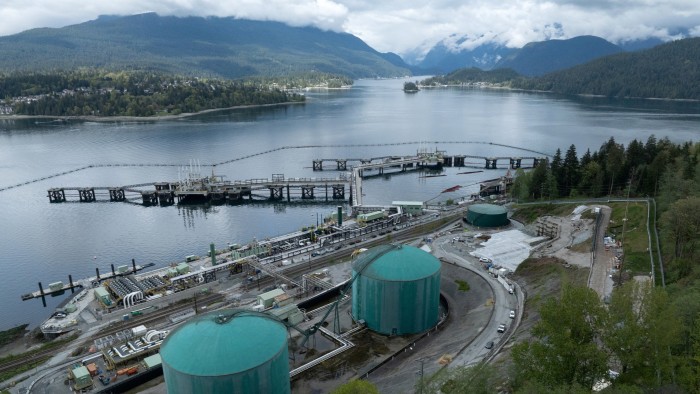
Canada’s Prime Minister Mark Carney is making waves with a new pipeline deal aimed at boosting oil exports. This project is designed to carry a million barrels of oil daily to Canada’s west coast, helping the nation decrease its dependence on the US market.
During an announcement in Calgary, Carney revealed a memorandum of understanding with Alberta’s Premier, Danielle Smith. They plan to construct a pipeline stretching 1,100 kilometers, linking Alberta’s northern oil sands to the coast.
Carney emphasized Canada’s aspirations to become an energy superpower while aiming to reduce emissions and diversify export options. “We want to build big things, and we’re building bigger and faster together,” he stated.
This pipeline will allow Canadian oil to reach Asian markets, supporting Carney’s goal of recalibrating the economy after recent trade tensions with the US significantly impacted North America.
Currently, Canada provides around 60% of US oil imports, totaling about 4 million barrels per day, mainly from Alberta’s rich oil sands, which are home to the world’s third-largest oil reserves.
Since taking office in April, Carney has engaged with Alberta’s fossil fuel sector as part of a “grand bargain” in response to trade challenges and tariffs imposed by Washington.
However, the pipeline is likely to encounter legal hurdles. Jeremy Barretto, a Calgary lawyer, highlighted the importance of gaining support from Indigenous groups and British Columbia to avoid prolonged legal disputes.
While the agreement hints at an adjustment to the ban on tanker traffic along northern British Columbia’s coast—where the pipeline would end—details remain unclear. Marilyn Slett, leader of the Heiltsuk Nation, criticized the governments for not consulting Indigenous communities, stating, “We will never allow our coast to be put at risk of a catastrophic oil spill.”
Additionally, the proposed rise in oil production related to the project will reportedly be offset by a major carbon capture initiative in Alberta. The province has pledged to reduce methane emissions by 75% over the next decade, while Carney’s government will not implement an emissions cap set by the previous administration.
Environmental advocates have voiced strong disapproval of the agreement. Caroline Brouillette, from Climate Action Network Canada, pointed out that Carney’s focus on new fossil fuel infrastructure could entrench Canada in a less competitive, fossil-fuel-dependent economy.
Currently, an existing pipeline transports approximately 890,000 barrels per day of crude from Alberta to Asia through Vancouver. While Smith supports expanding to Asian markets, British Columbia Premier David Eby has expressed strong opposition and criticized his exclusion from recent negotiations, calling it “unacceptable.”